Gear · page 40
What you need, and no more.
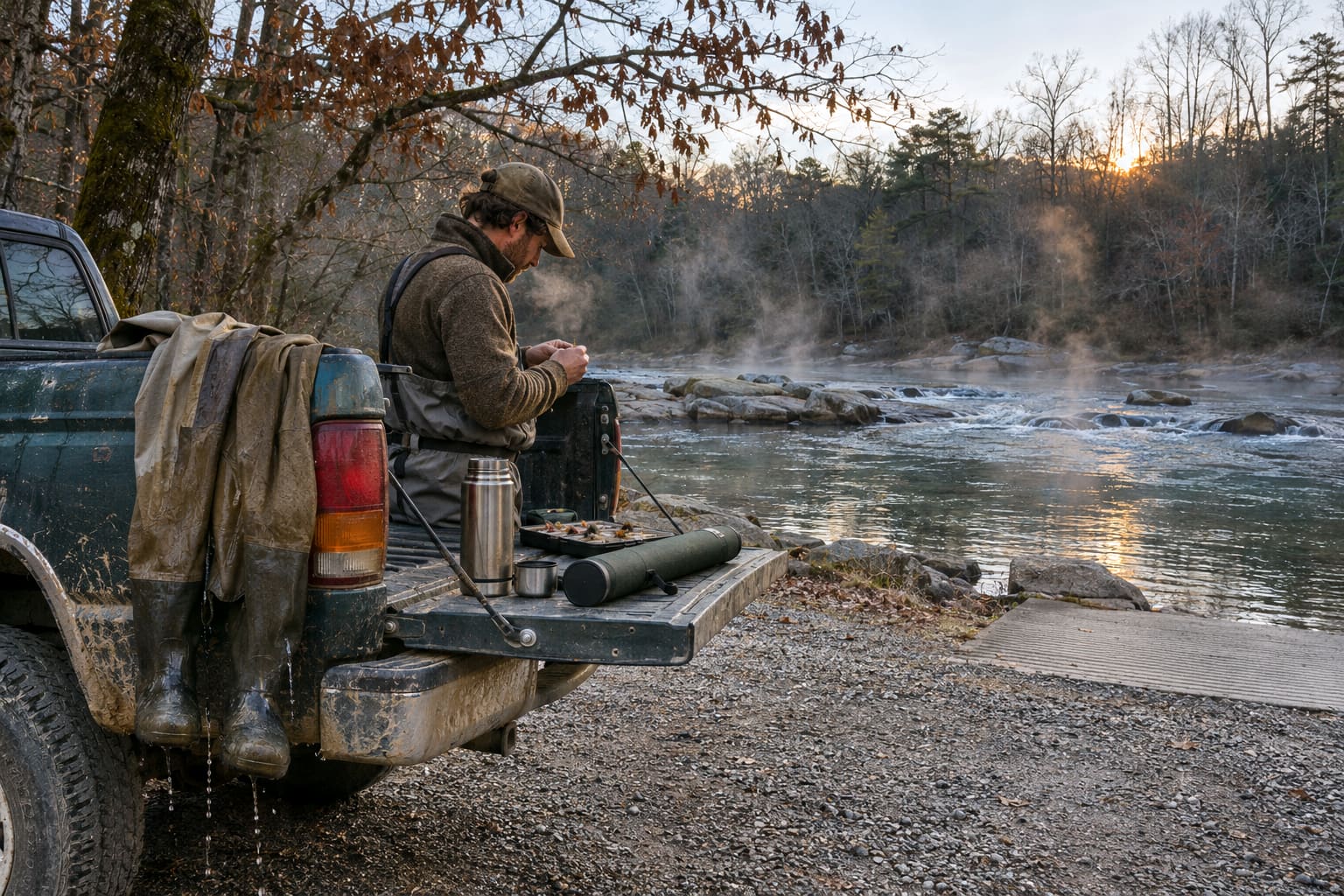
Gear matters least. Here is what works on this river, by what it does rather than who makes it. Tap any number on the tailgate, or in the list under it, to see why that thing is there.
The kit for a day, laid out
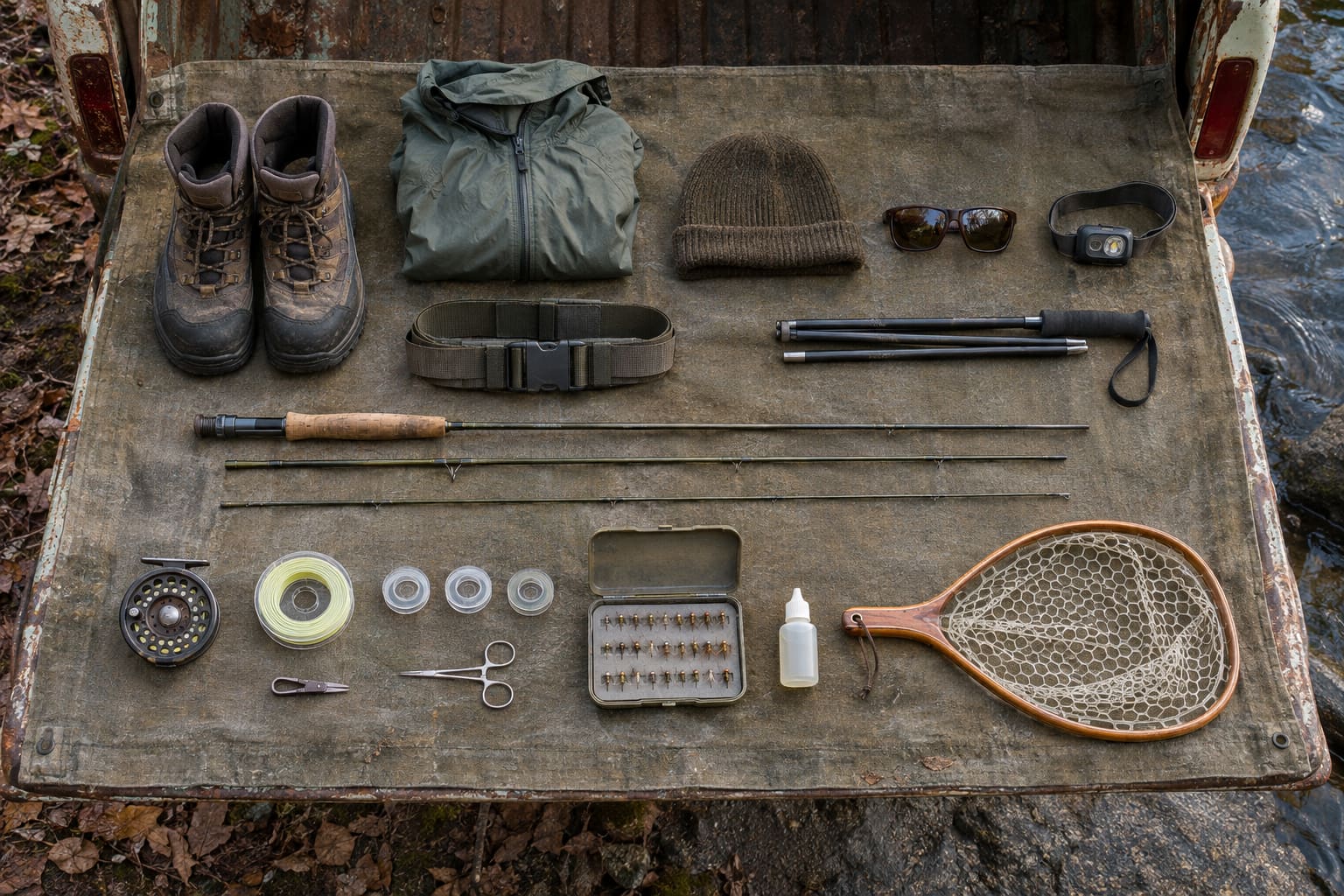
On the tailgate
Tap a number to see why it is there.
Every item in the kit is here for a reason that has to do with this river. The numbers match the list below.
In the listTick things off as you pack; the list stays on this device.
Rod and reel
A nine-foot rod for a five-weight line does almost everything on this river. A four-weight is lovely for dry flies in summer; a six helps with streamers in winter. The reel only needs to hold line and have a smooth drag.
Leaders and tippet
Most of your trouble and most of your fish come down to the last three feet. Carry more tippet than you think you need.
- ButtThick and stiff, so the cast turns over. About half the leader.
- TaperThinning quickly, so the energy runs down to the end.
- 5X tippetThe last part, added by hand with a knot, and replaced as it shortens.
- 6X for midgesTwo feet more of the finer stuff when the fish are looking hard.
Flies
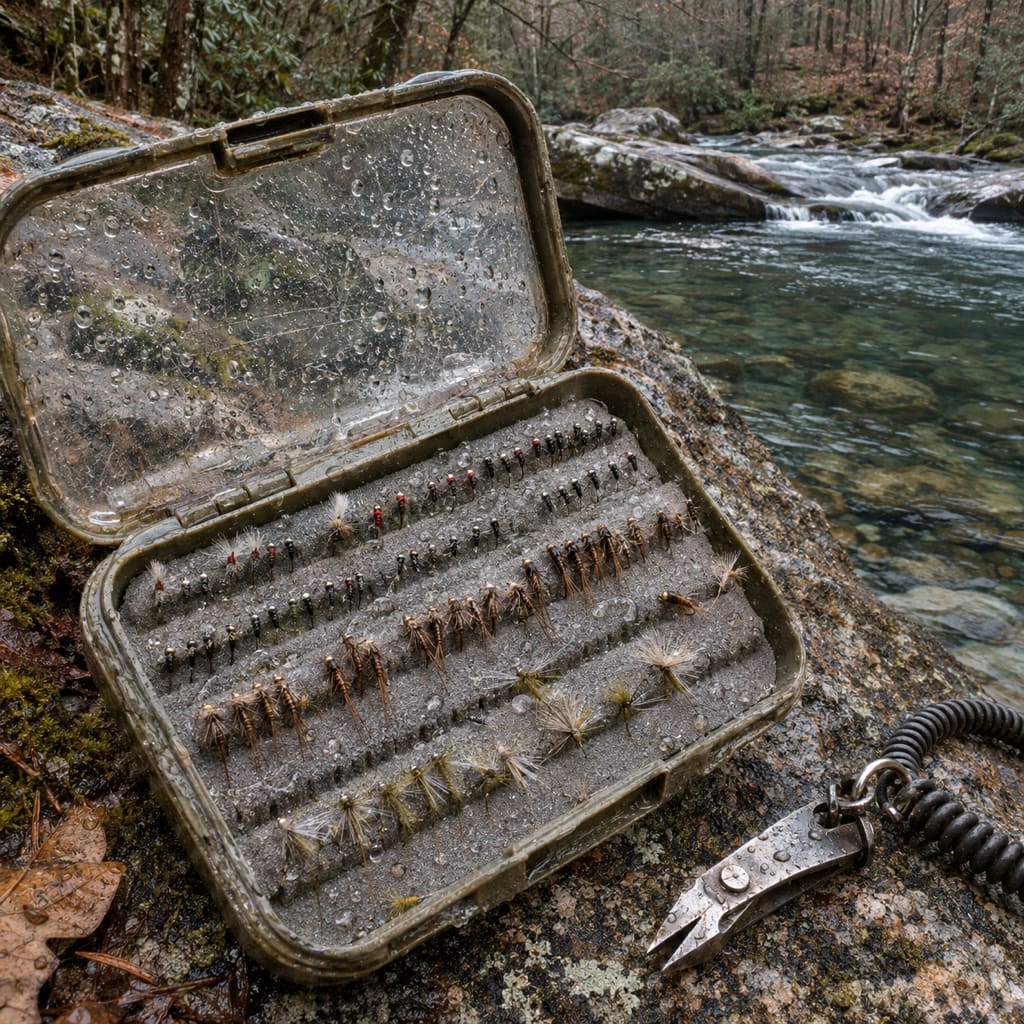
A dozen patterns, in two or three sizes, will see you through a year. Tie them if you can.
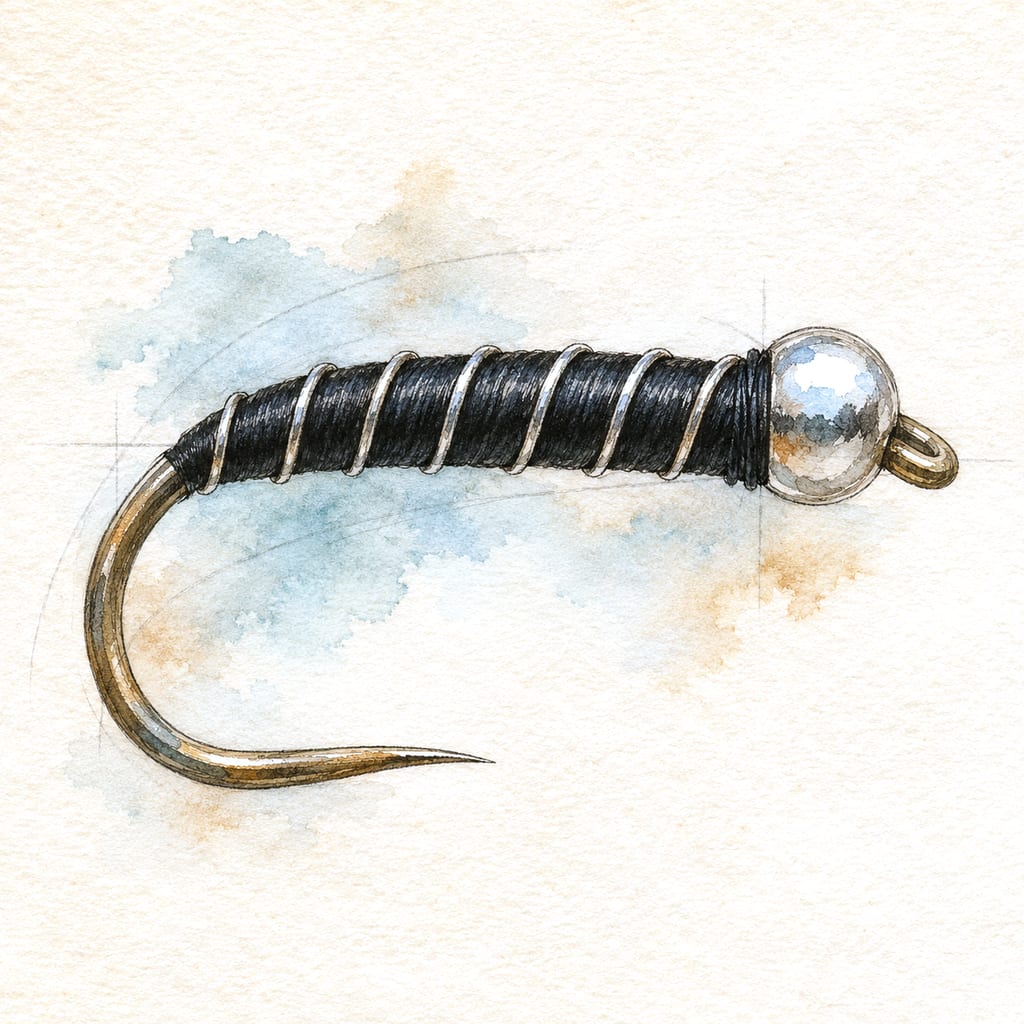
Zebra midgeSizes 18 to 22 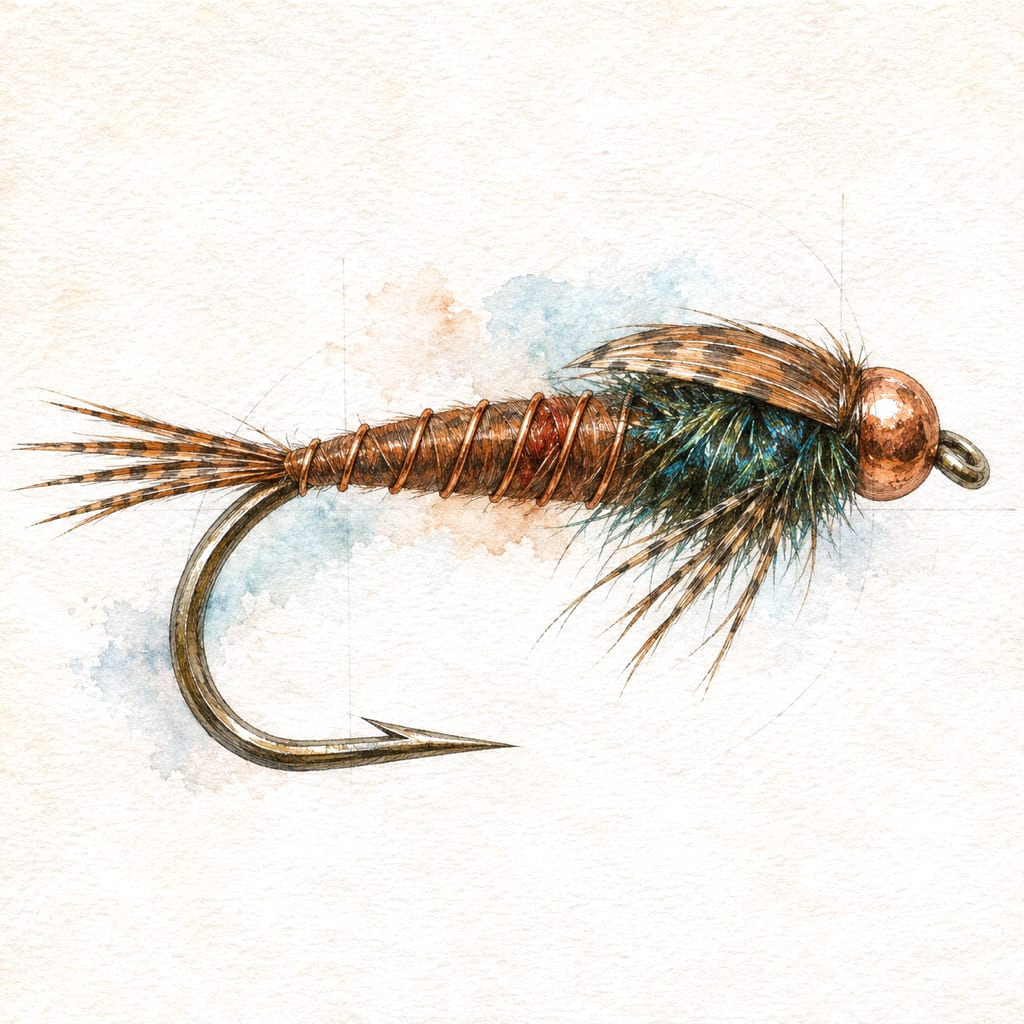
Pheasant tailSizes 16 to 20 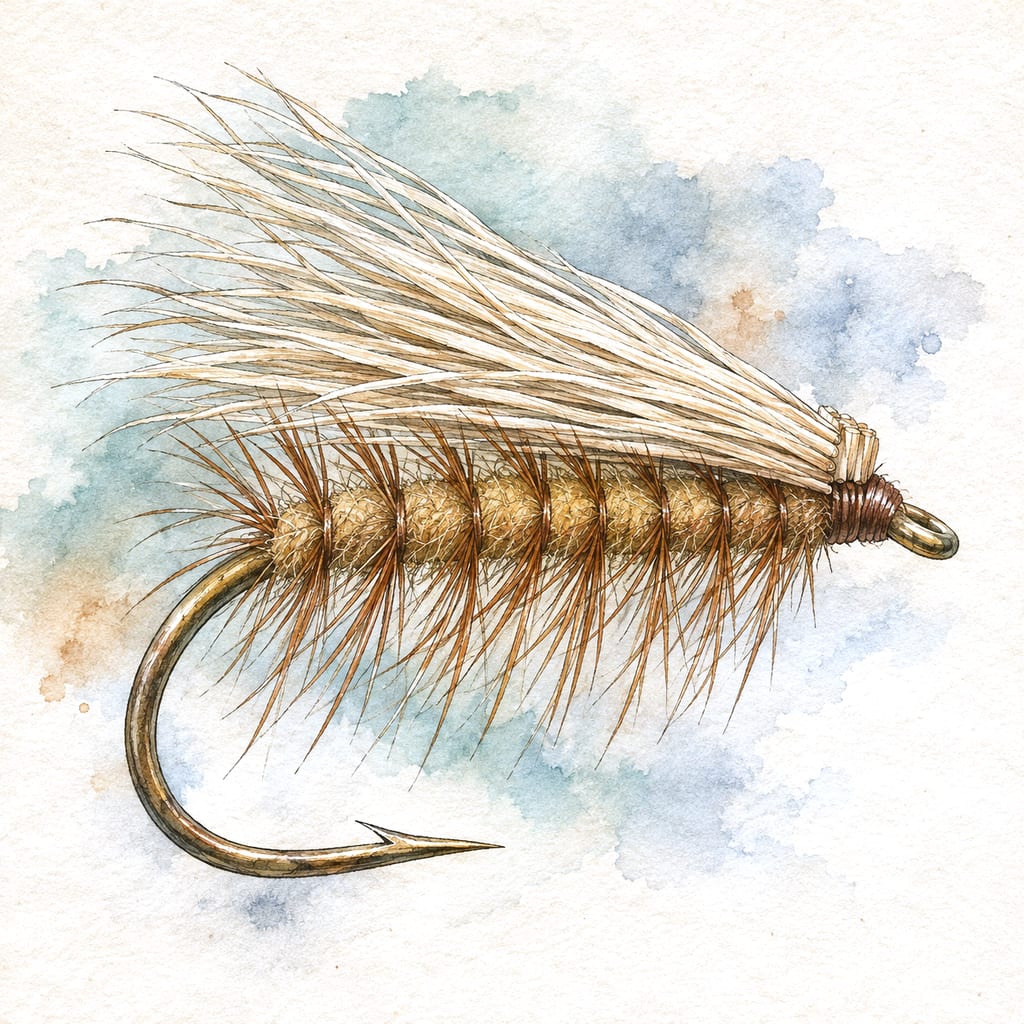
Elk-hair caddisSizes 14 to 16 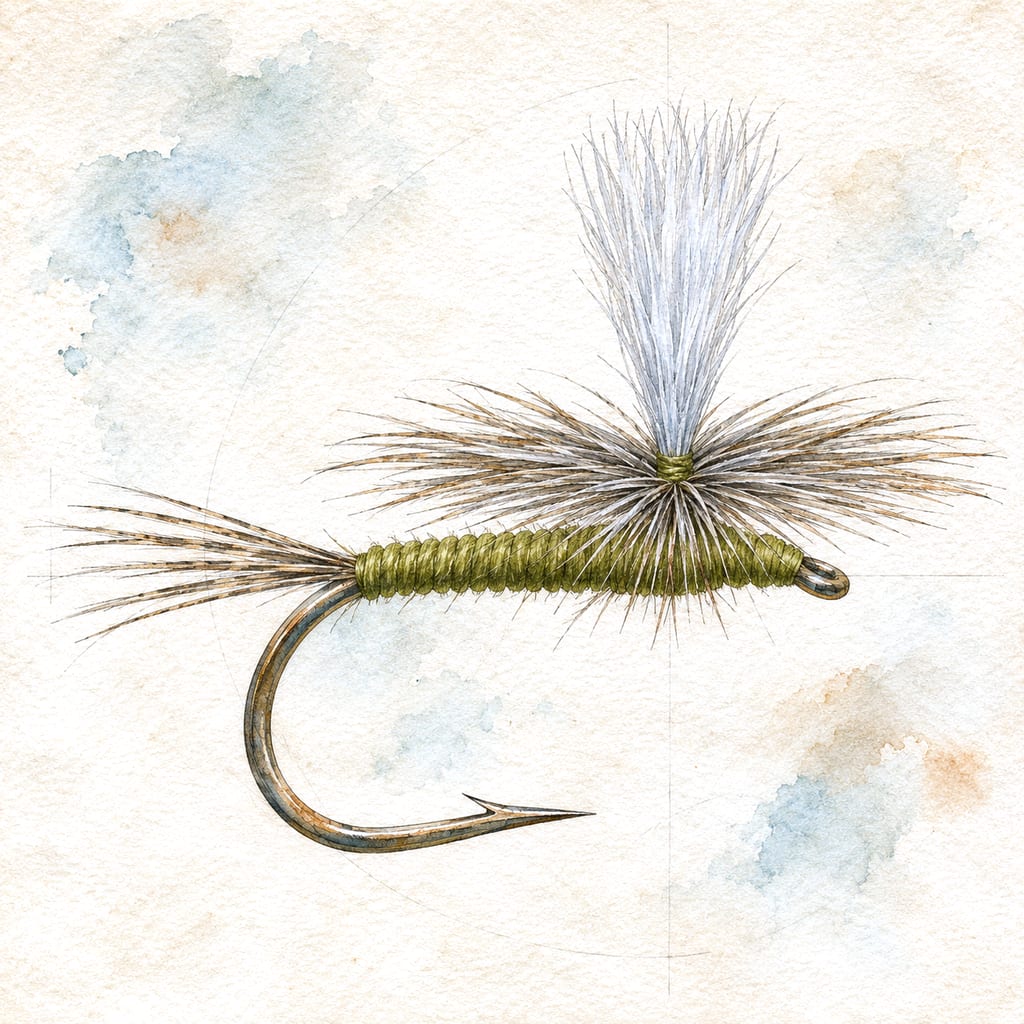
Parachute oliveSizes 18 to 22 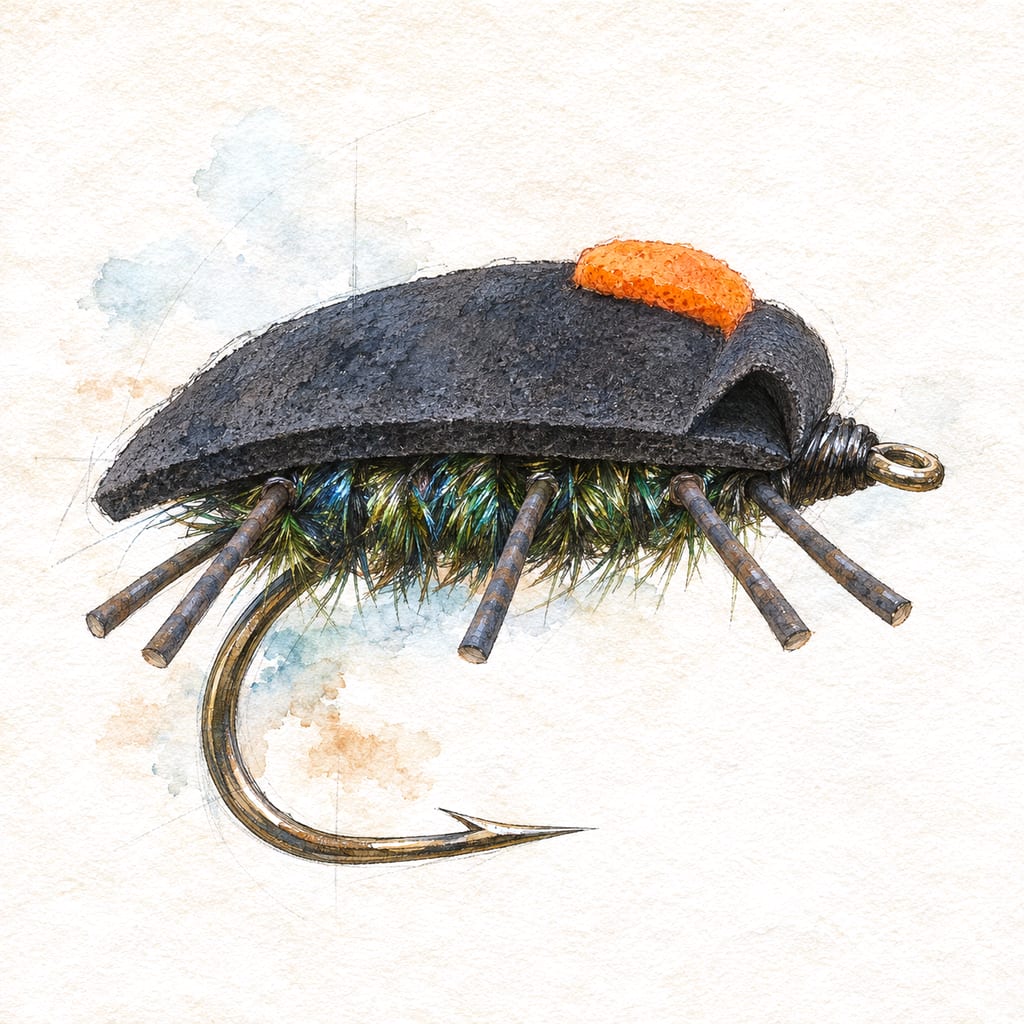
Foam beetleSizes 14 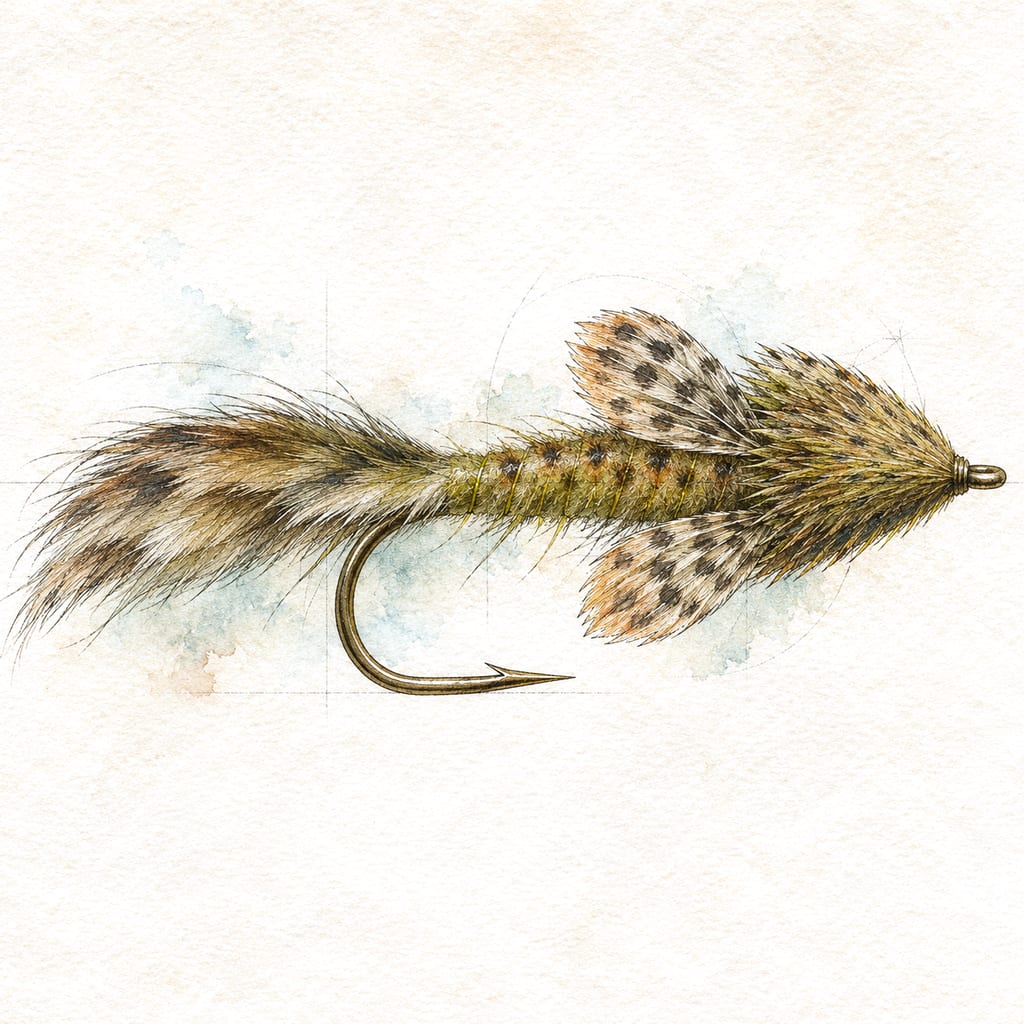
Sculpin streamerSizes small, on a long hook Wading
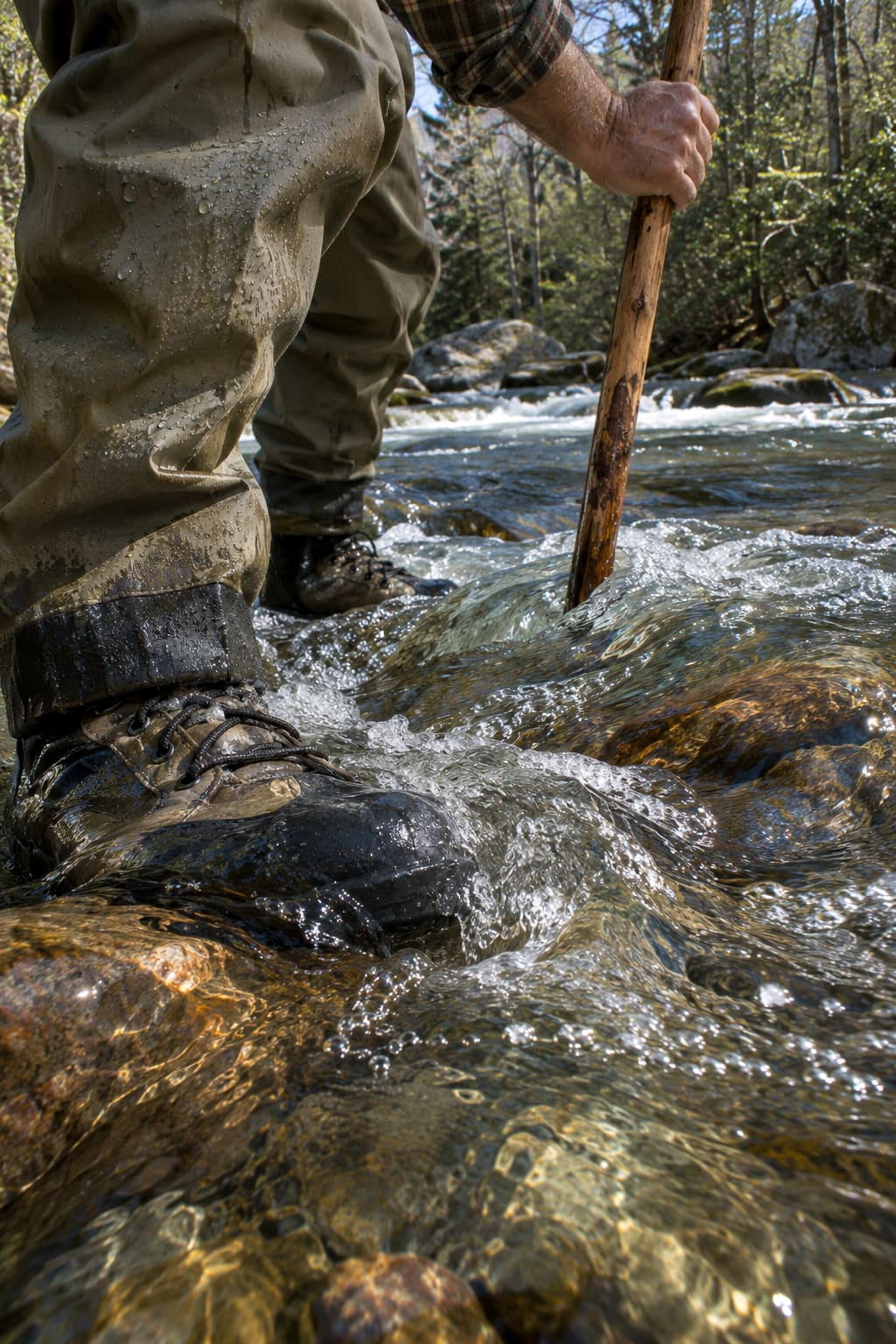
The water is cold and the rocks are slick. This is the one place not to save money.
Layers
The river is cold even in July, and the fog is cold in November.
The small stuff
The pockets of a good vest, and a net.
Wading or floating
What changes in the boat.
- On your feet
- Wading boots and a staff, a belt, the whole vest on you. Less gear, more care.
- In the boat
- Rods rigged two ways, a life jacket, a dry bag, layers you can add without standing up.
Packing
Pack the truck, not the vest.
Keep a crate in the truck with the things you forget: spare tippet, a towel, dry socks, a headlamp, a printed map of the access points. The vest only carries what you need in the water.
A note on brands
We don’t name names here.
Good rods, reels and waders are made by a lot of companies, and the right one is the one that fits you and can be repaired. When a brand sends us something to try, we say so in the letter, every time.
What not to buy first
A fast rod, an expensive reel, a vest with forty pockets. Buy boots, a staff and a lesson.