The Sunday Letter · Sunday, November 1
The fog line
Cold water, warm air, and the strange hour when the river disappears and the fish don’t seem to mind.
In four parts, with a drawing of the shoal by sound
Arriving
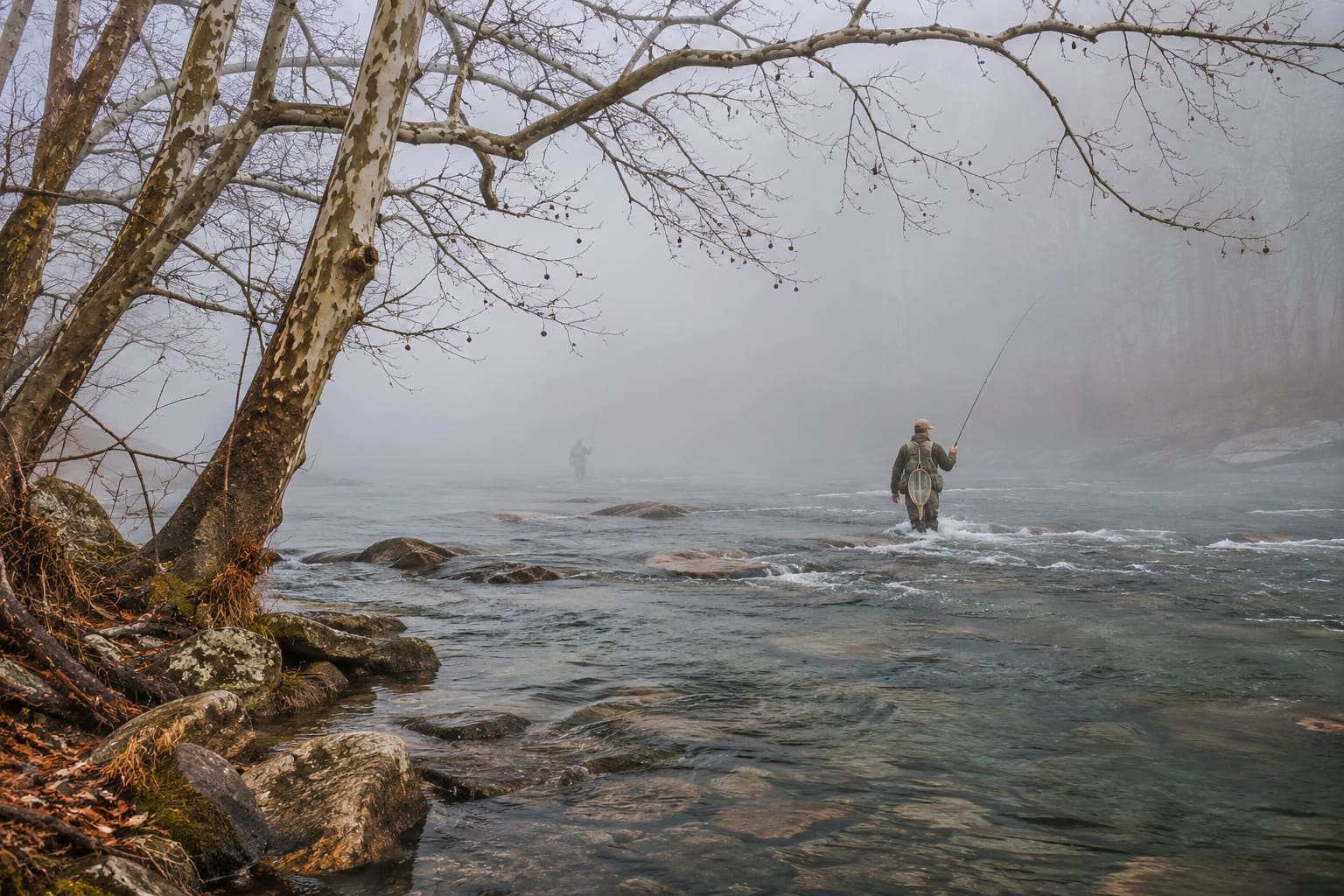
In November the lake behind the dam has turned over, and the water coming out of the bottom of it is colder than the morning air. Where the two meet, the river makes its own weather: a low white bank of fog that lies on the water like a sheet on a bed, a few feet thick and perfectly still.
Most people wait for it to burn off. I have come to love the hour before it does. You can hear the shoals but not see them, and the trout, which never seem bothered by fog, go on feeding as if nobody were watching.
The trick is to trust your ears. A riffle sounds different from a run. A ledge has its own small roar where the water tips over it. Stand still on the bank for a minute and you can sketch the shoal by sound before you step in. Then look as well as listen: sound tells you where the water is moving, not how deep it is.
- 1The riffle: a steady hiss across the top. Shallow, quick water, full of insects.
- 2The ledge: a small roar where the water tips over. Fish lie just under the lip.
- 3The run: almost silent, deep and smooth. In this drawing, the likeliest holding water.
- 4The pool: nothing at all. Slow water, and the fish that are resting.
- 5You, on the bank, listening before you step in.
What the surface shows
In fog the river shrinks to the circle you can see, twenty or thirty feet of water, and that turns out to be a gift. You stop looking for the far bank and start looking at the surface right in front of you: the slick behind a rock, the line of bubbles down a seam, the small, soft rings where a fish has taken something just under the film.
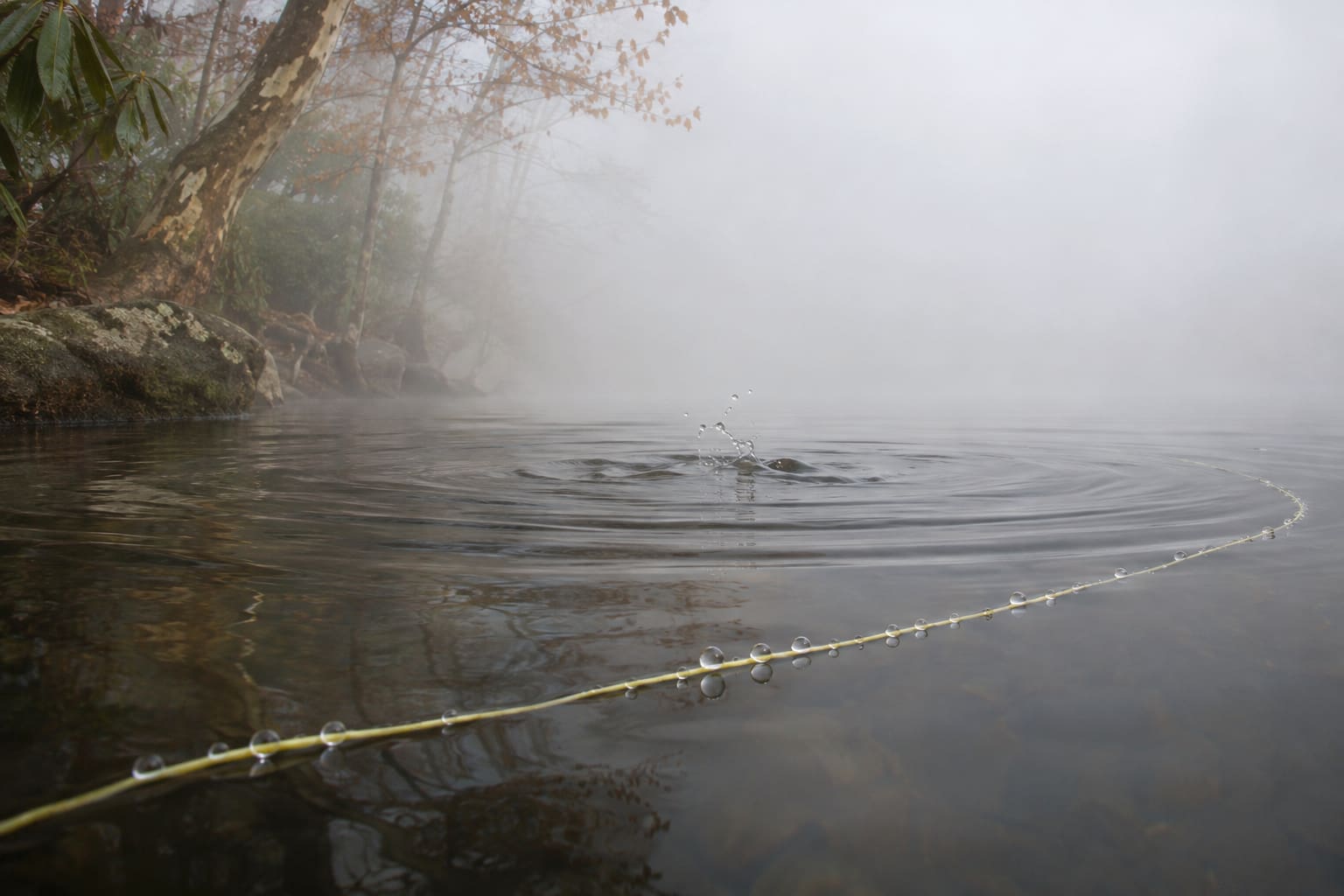
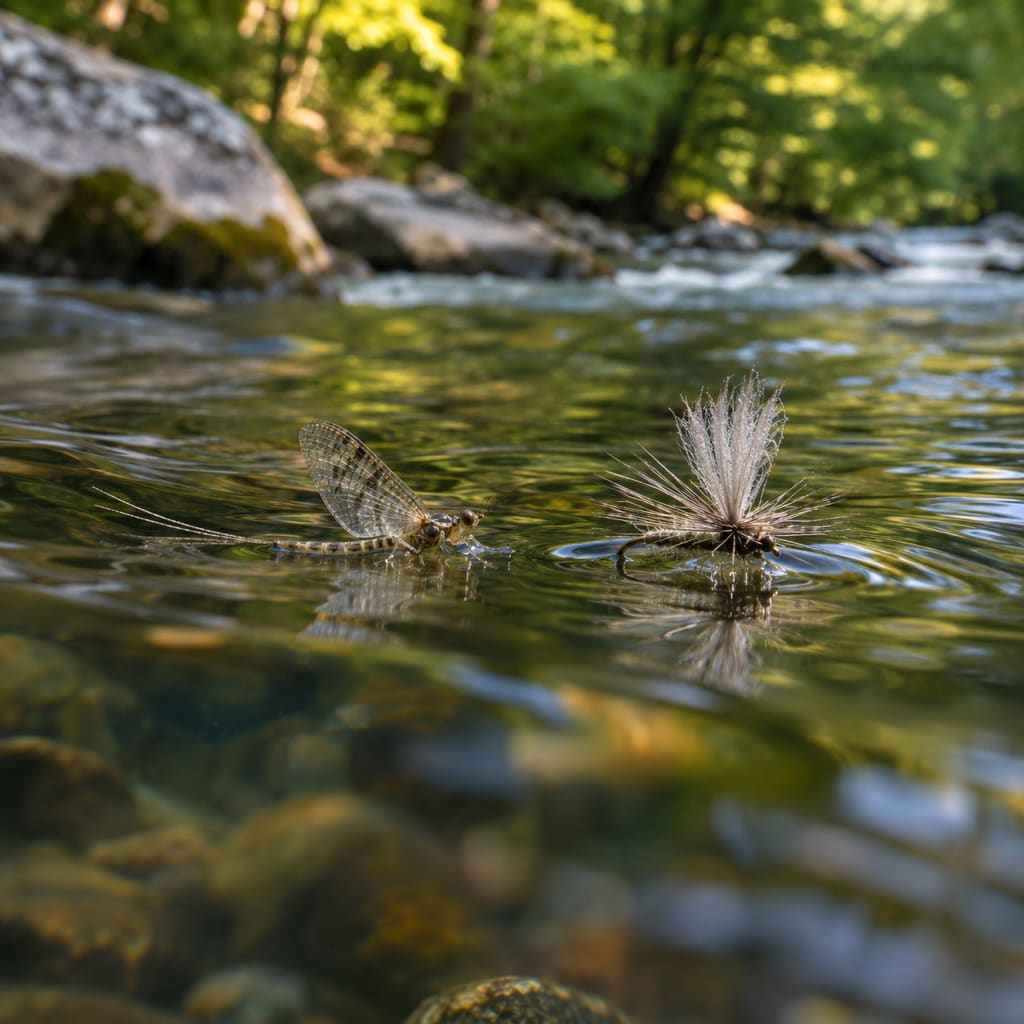
Those rings are some of the most useful things on the river in November. A ring with a bubble in it can suggest the fish took something off the top; a ring without one, or a bulge that never quite breaks, can suggest it took something just under: a midge pupa hanging in the film, or an olive nymph on its way up. Neither is certain. Watch the same fish rise two or three times, and look for insects on the water, before you choose how deep to fish.
The decision
In fog, every cast wants to be a long one, because the far bank is invisible and the mind fills in the distance. Resist it. The fish are usually where they would be on a clear morning, on the seams, behind the rocks, in the soft water at the head of the pool, and many of them within thirty feet of your boots.
You can hear the shoals but not see them, and the trout go on feeding as if nobody were watching.
So I fish a short line in the fog, high-sticking a pair of small nymphs through water I can just see, watching the end of the fly line rather than an indicator I would lose in the white. It is closer to feeling than to fishing. When the line stops, I lift.
What to tie on this week
- A zebra midge, black, size 20Almost anywhere, most of the day
- A small olive nymph, size 18Below riffles, mid-morning
- A partridge and orange soft hackleTailouts, as the fog lifts
- An olive dry fly, size 20If you see them, on gray afternoons
When it lifts
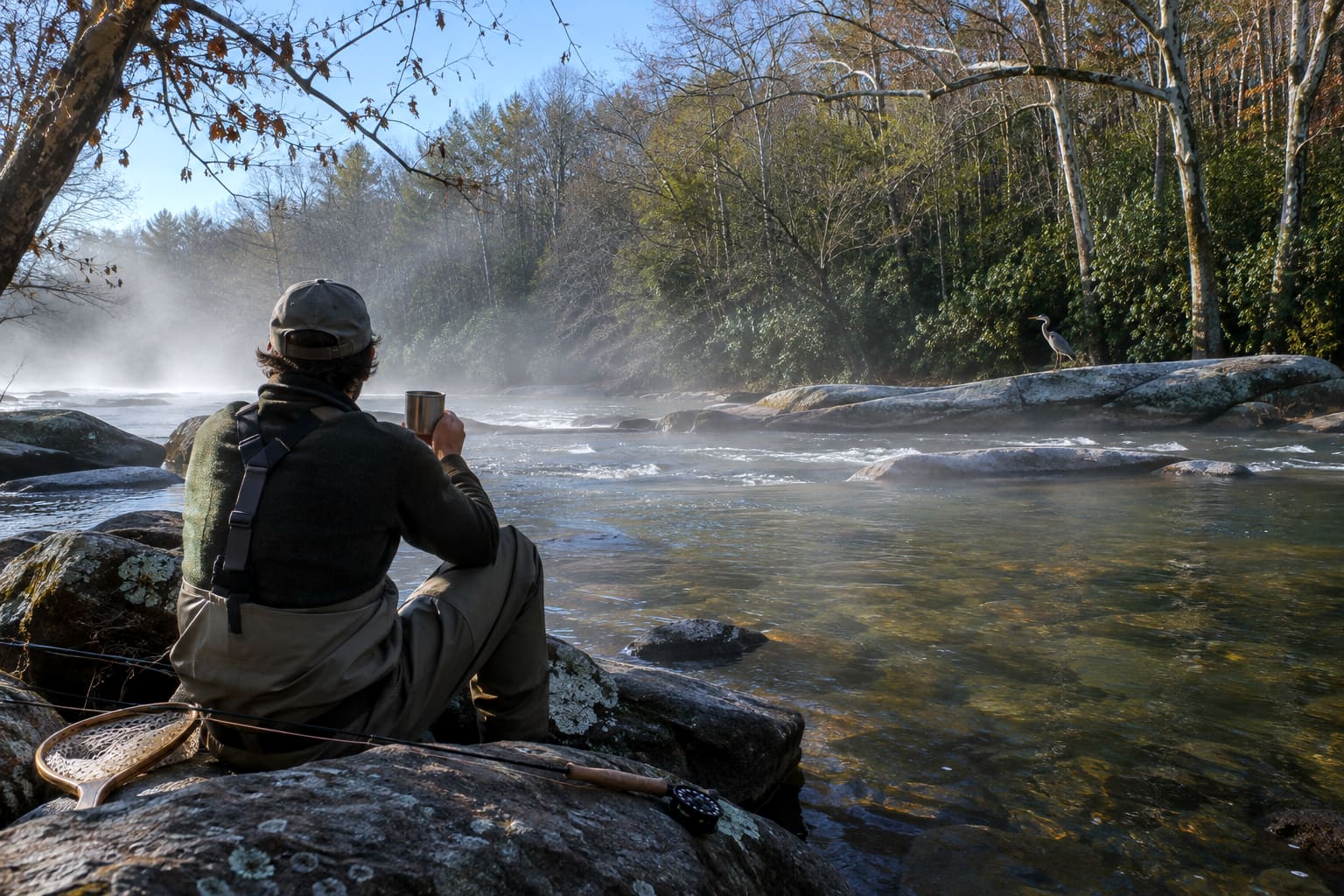
The fog goes all at once, usually a little after nine. One minute you are alone in a white room; the next there is a heron on the ledge across the river, a jogger on the trail above you, and a bright cold sky. The trout, if they were feeding, slow down. It is a good time to sit on a rock and drink whatever is left in the thermos.
A word about safety, because fog makes it easy to forget. Below the dam the river can begin rising within minutes of a release, and in fog you may not see it coming. Check the generation schedule before you go, mark a rock at the waterline, and wade only where you know your way out. If the river starts to push harder against your legs, walk to the bank first and wonder why later.
See you on the water, foggy or not.
Ben