The Sunday Letter · Sunday, October 4
What a shorter cast buys you
Thirty feet of line, done well, is worth seventy done badly. A letter about restraint.
Two drifts, drawn
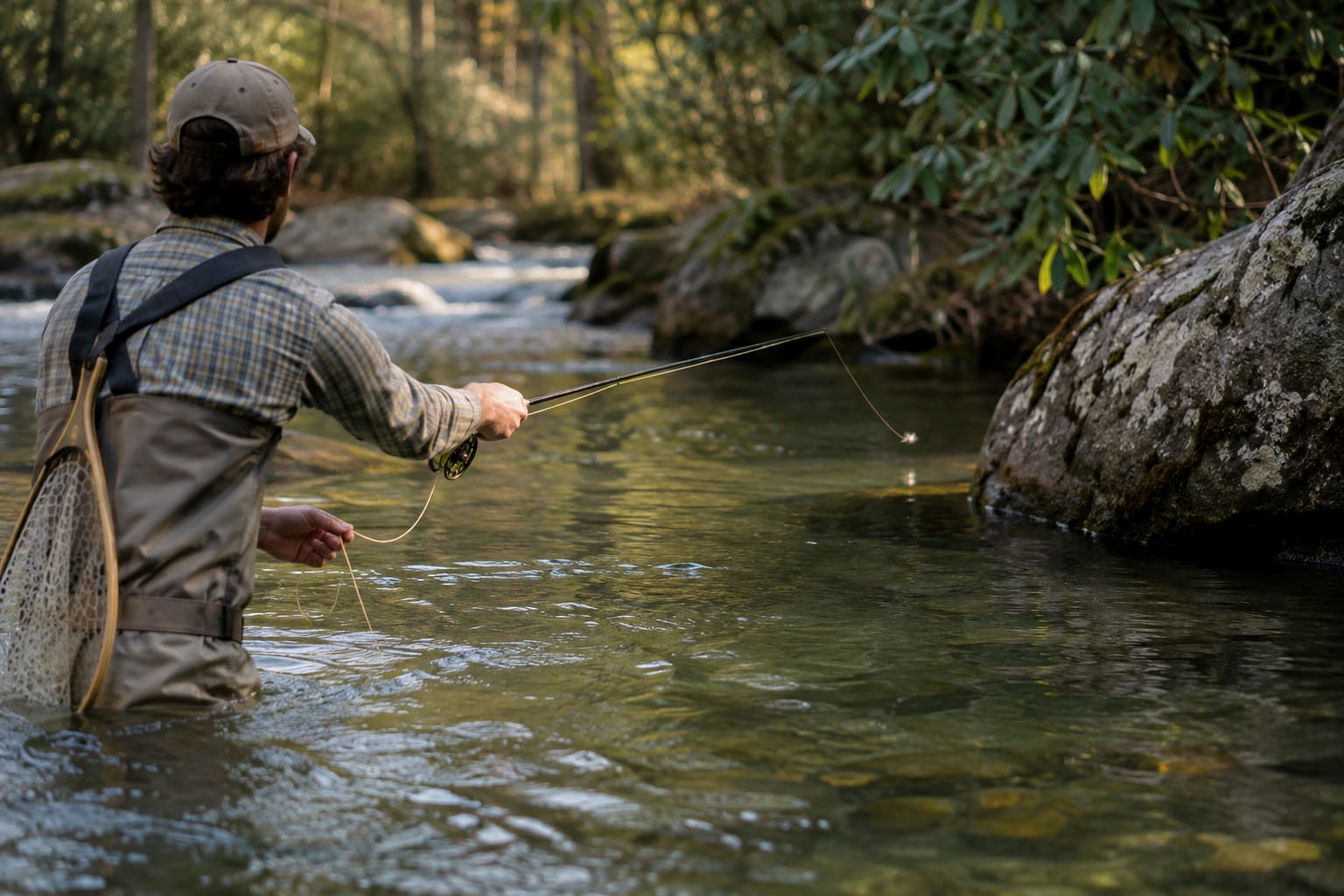
Every beginner I have ever guided wants to cast farther. I understand it: a long cast looks like skill, and the far bank always looks fishier than the near one. But on this river, many of the trout you’ll catch are within thirty feet of your boots, and the long cast is often what stops you catching them.
The reason is drag. A fly that drifts at the speed of the current looks like food. A fly that is pulled faster or slower than the water around it, by the line it is tied to, looks like something wrong, and a trout that has watched a thousand drifting insects will turn away from it.
Look at the long cast. Seventy feet of line lies across three currents: the fast water in the middle, the slow water along the far bank, and the medium water at your feet. The fast water grabs the middle of the line and pulls it downstream in a belly, and the belly drags the fly. You get a few feet of good drift, and then the fly skates.
Now the short cast. Thirty feet of line, most of it held off the water by a raised rod, lies on one current. The fly and the line move together, at the same speed, and the drift is good from the moment the fly lands until you choose to lift it.
Many of the trout you’ll catch here are within thirty feet of your boots.
What it costs
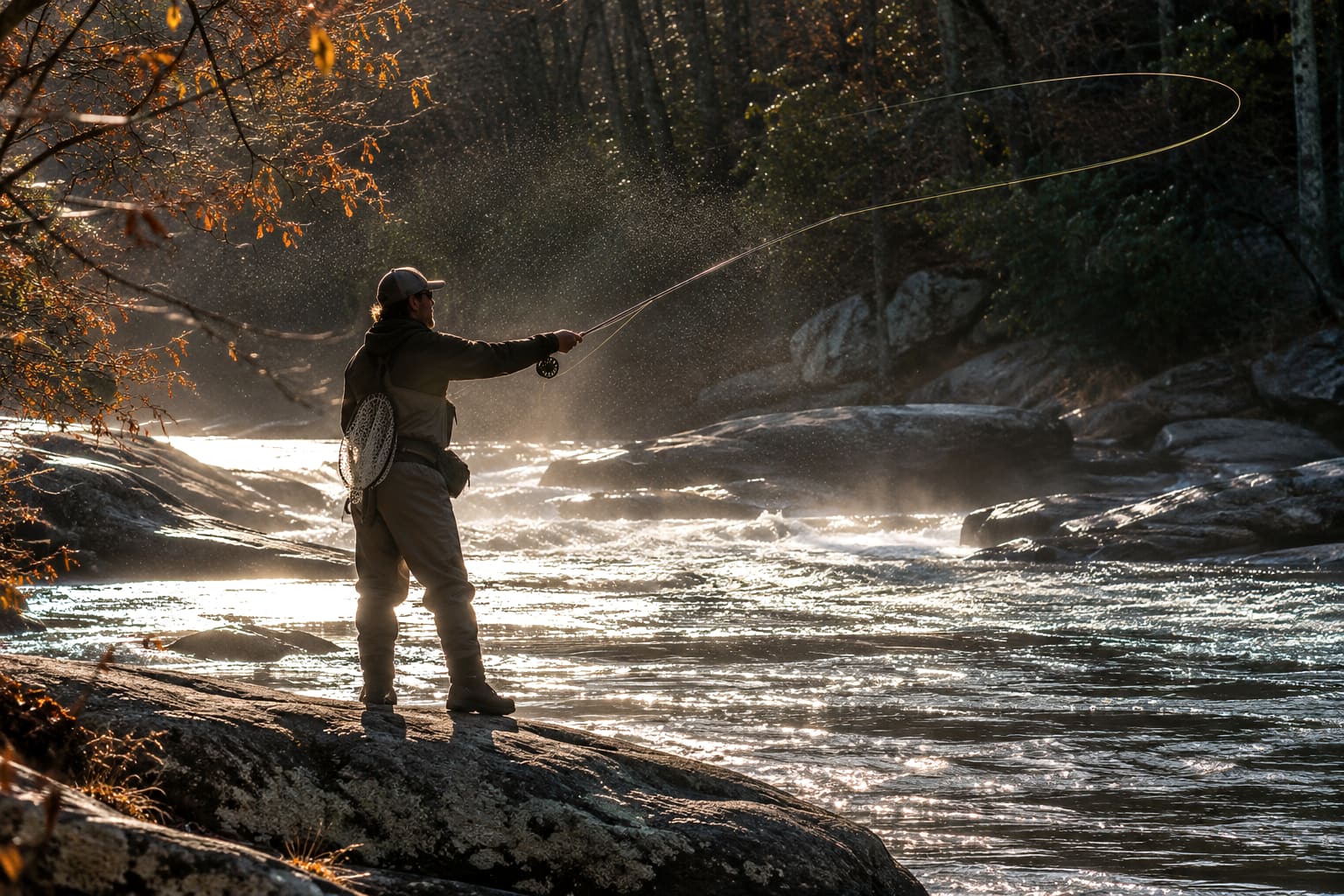
The short cast asks for something in return: you have to get closer. That means wading slowly, staying low, keeping the sun out of your shadow, and sometimes walking a long way around to come at a pocket from below. It is more work than casting. It is also most of what fishing well actually is.
So this week, try it. Choose a piece of water, wade to within thirty feet of it, and fish it with a short line. If you don’t catch anything, wade closer.
Closer, and slower.
Ben