The Sunday Letter · Sunday, October 25
The heron knows first
On learning to read a shoal by watching the bird that has been reading it all morning.
An observation sequence, in four frames
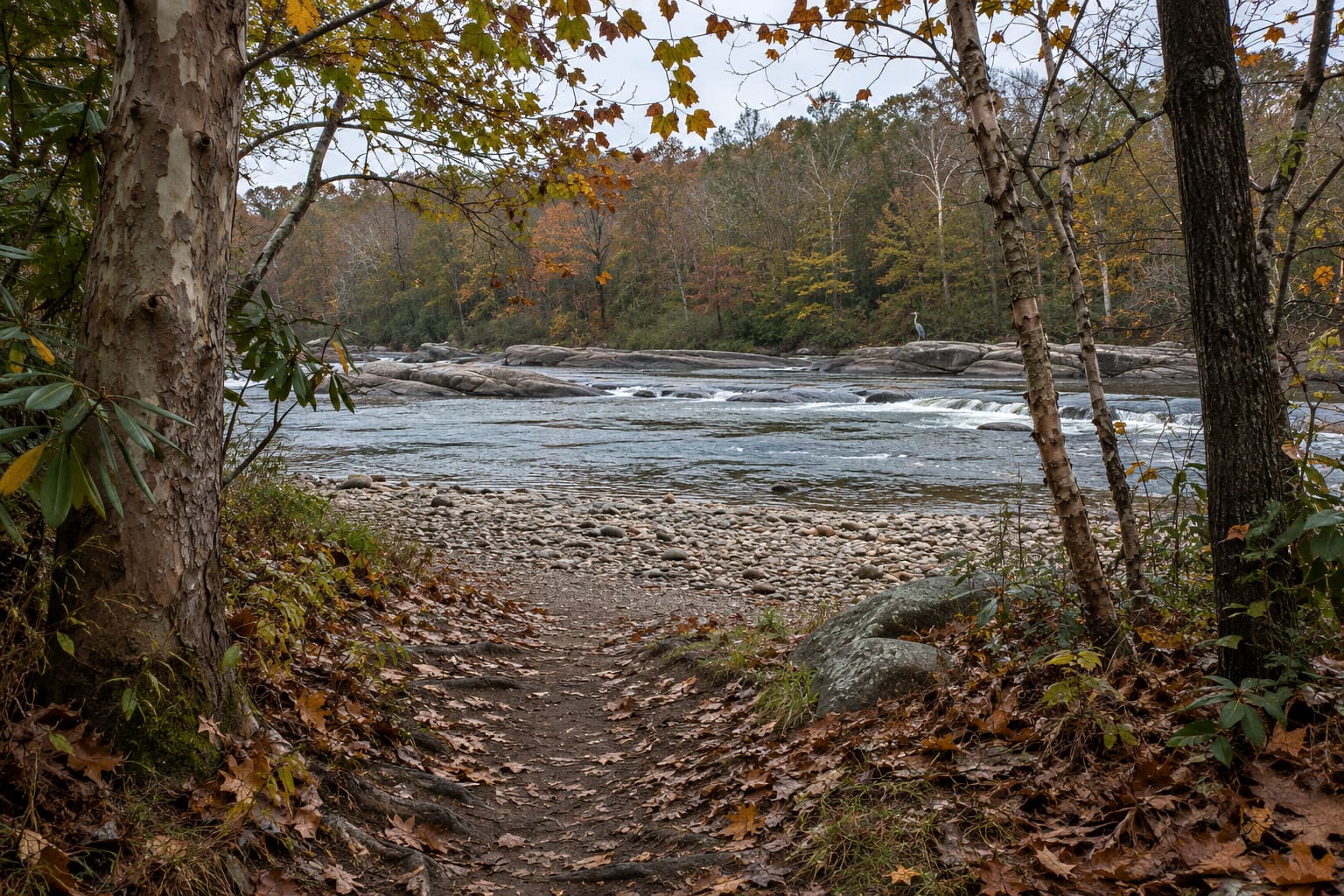
There is a heron that works the shoal below Settles Bridge most mornings in October. I have never seen it arrive. It is just there when I come out of the woods, standing on a ledge at the edge of the fast water, so still that I have walked past it more than once thinking it was a stick.
For years I treated it as scenery. This fall I started treating it as a guide, because it is doing the same thing I am, it has been doing it since first light, and it is better at it. So this week’s letter is four things I watched the heron do, and what each one taught me about the water.
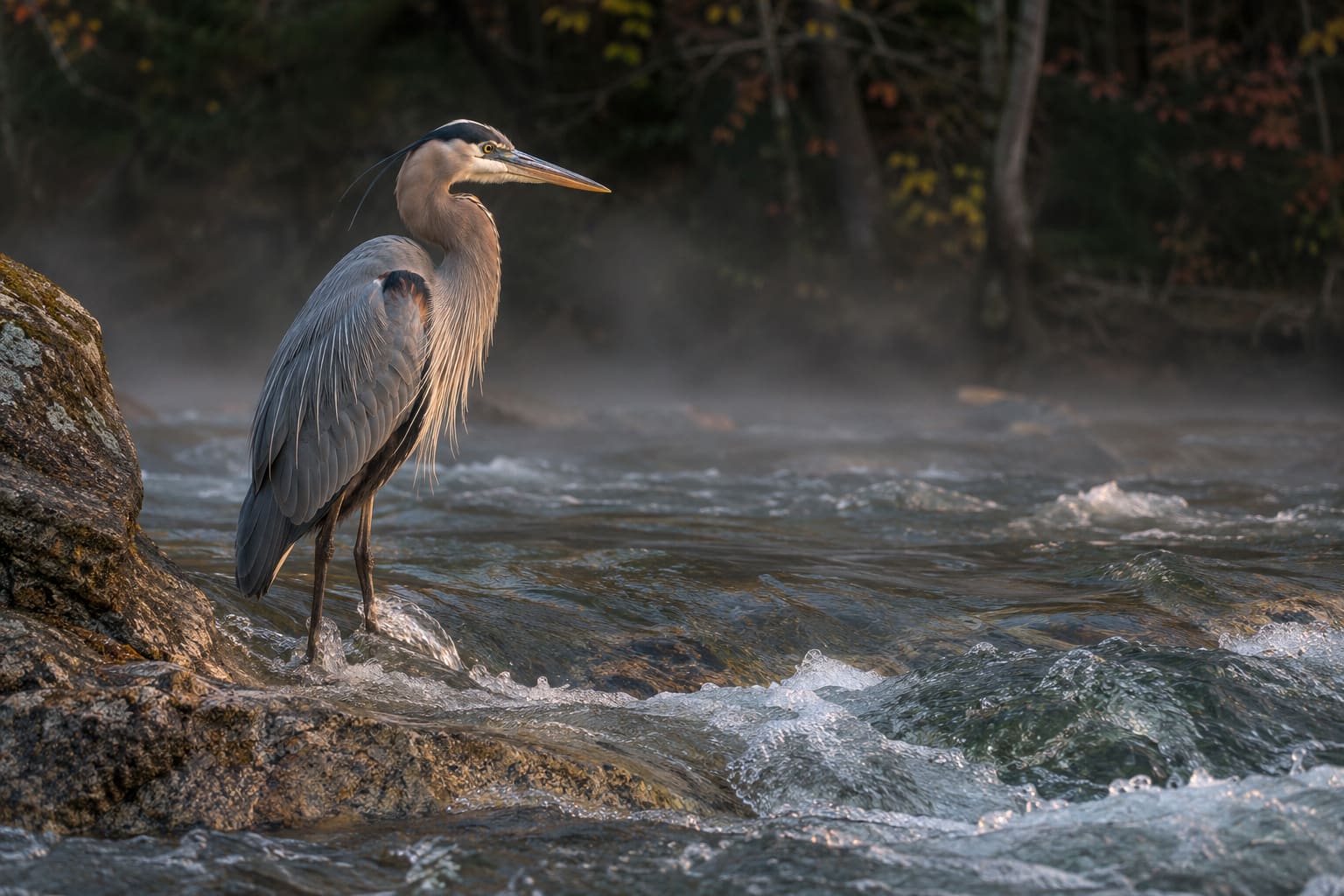
![A great blue heron standing still on a granite ledge at the edge of a shoal at first light.]()
Observation one
Where it stands
Rarely in the middle of anything. Nearly always at an edge: the edge of a ledge, the edge of a riffle, the line where shallow, pale gravel turns into darker water. It stands in water shin-deep to a heron, which is ankle-deep to you, and it faces upstream.
What it teaches Small fish often feed at the edges, in the shallow water next to the current. Trout often do too, early, before the light is on the water.
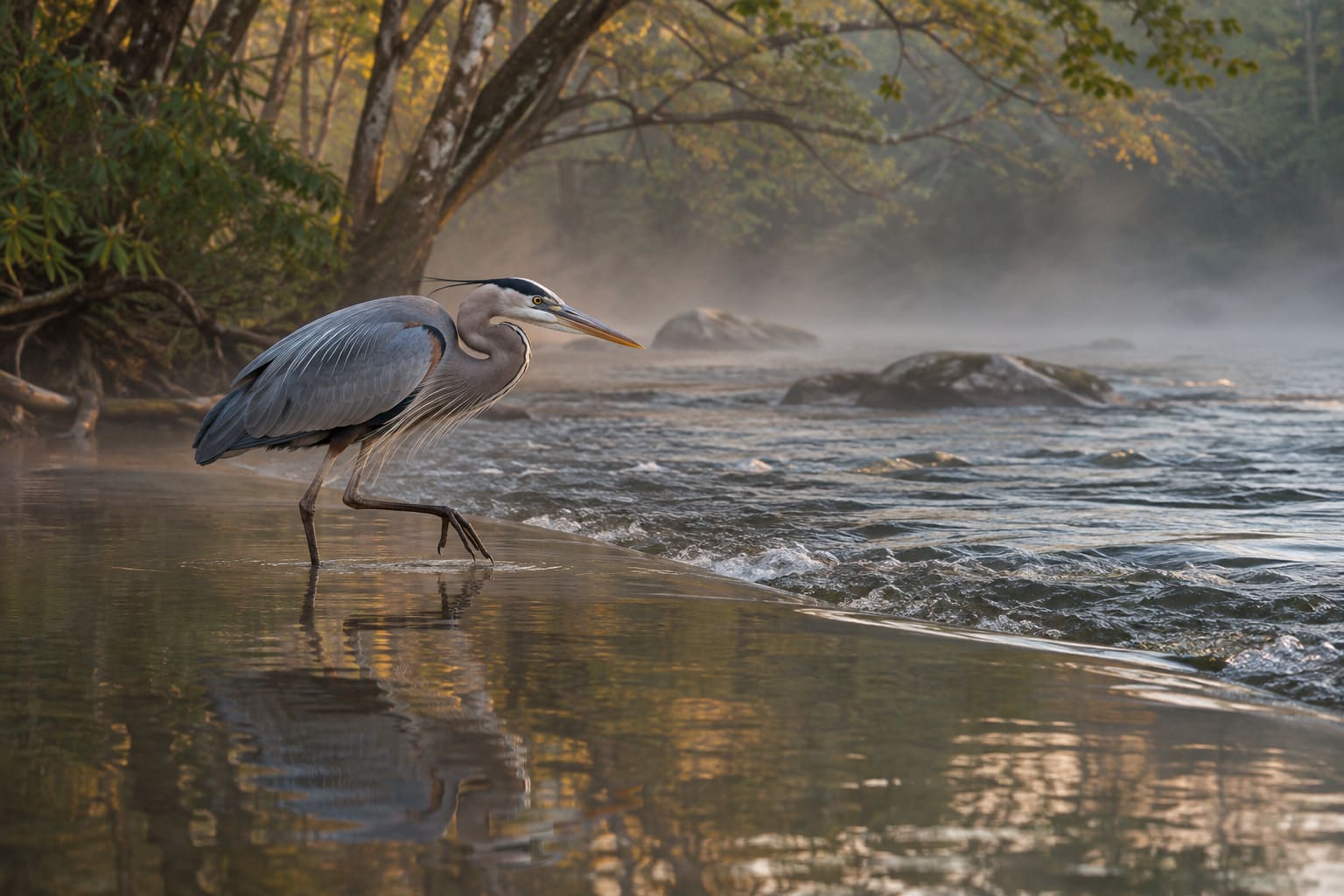
![A great blue heron wading very slowly along the edge of a misty shoal, one foot lifted, its reflection broken by the current.]()
Observation two
How it moves
When it moves at all, it moves along a seam, seldom across it, one slow step at a time, lifting each foot clear of the water and setting it down without a ripple. It can take a minute to go ten feet.
What it teaches Wade the way the heron does. Along the seam, slowly, and stop often. Many of the fish you spook, you spook by moving.
![A great blue heron mid-strike at the edge of a granite ledge, bill driven into the water in a burst of spray.]()
Observation three
Where it strikes
When it strikes, it is almost always at the lip of a ledge or the tail of a riffle, the places where the current tips something into reach. It doesn’t chase. It waits until the water brings the fish to it.
What it teaches Put your fly where the heron puts its bill: the lip, the tail, the seam. Then let the current do the work.
![The empty granite ledge at the edge of a shoal just after a heron has lifted off, the bird leaving the frame low over the water.]()
Observation four
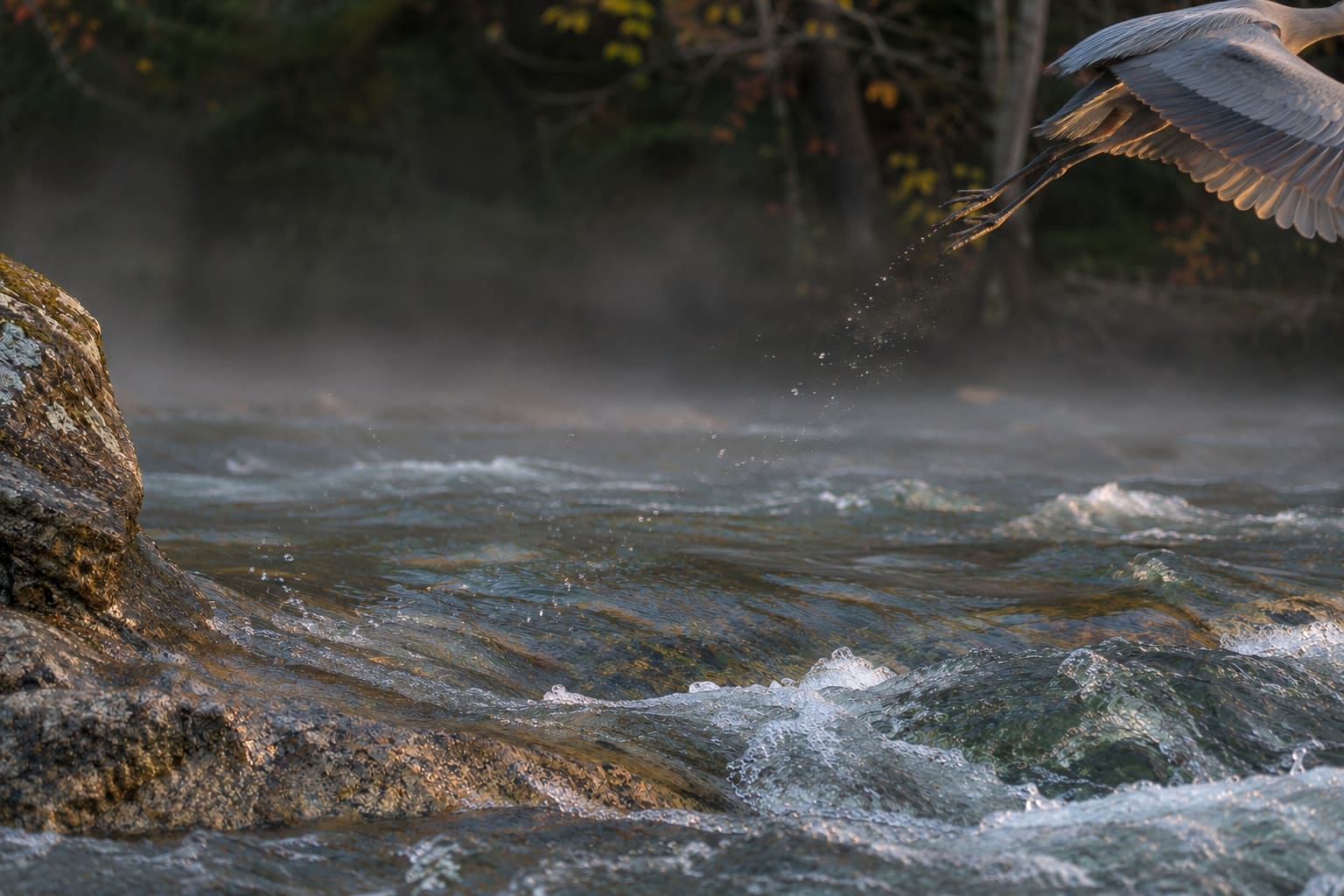
When it leaves
It leaves when the sun reaches the water, or when I get careless. Either way it is telling me the same thing: the edges are probably finished for the morning, and the fish have likely dropped back into deeper water.
What it teaches When the heron goes, go deeper: the slots below the ledges, the head of the pool. The fishing doesn’t stop; it moves.
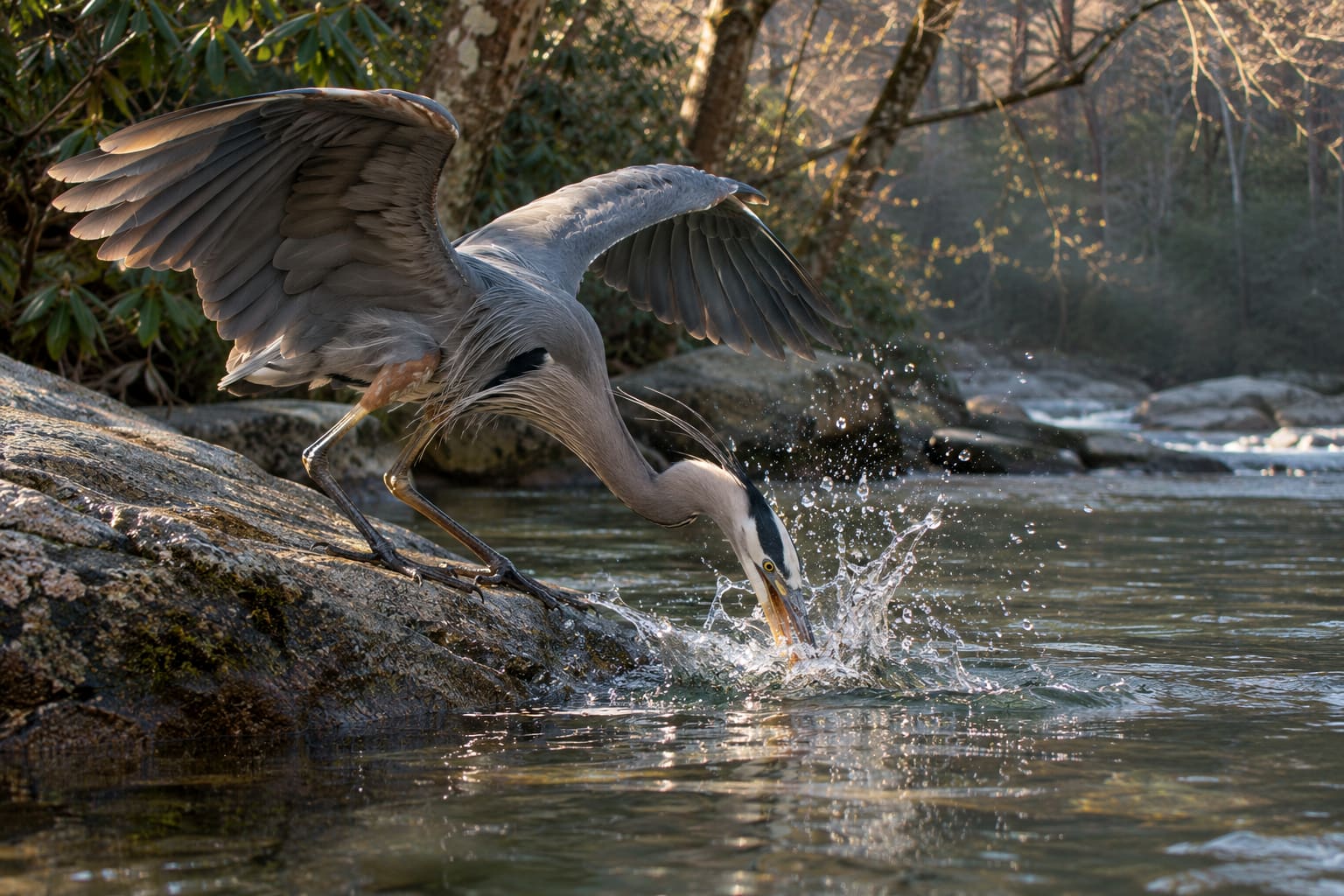
It doesn’t chase. It waits until the water brings the fish to it.
None of this is new. Every old book about reading water says to fish the edges early and the depths late, and to move slowly. But I had read it so many times it had stopped meaning anything. Watching the heron do it, morning after morning, made it true again.
One more thing. Twice this month the heron has been standing on the exact rock I was walking toward. Both times I took the hint and fished below it instead, and both times there was a fish there. I am not saying the bird is doing it on purpose. I am saying I have stopped arguing with it.
What to tie on this week
- A partridge and orange soft hackleSwung across the tailouts, early
- A small sculpinAlong the ledges, gray mornings
- A zebra midge, size 20In the slots, once the sun is up
Watch the bird. Then fish where it isn’t.
Ben