Stretch three of five · Riffles and runs between suburban banks
Abbotts Bridge to Medlock Bridge
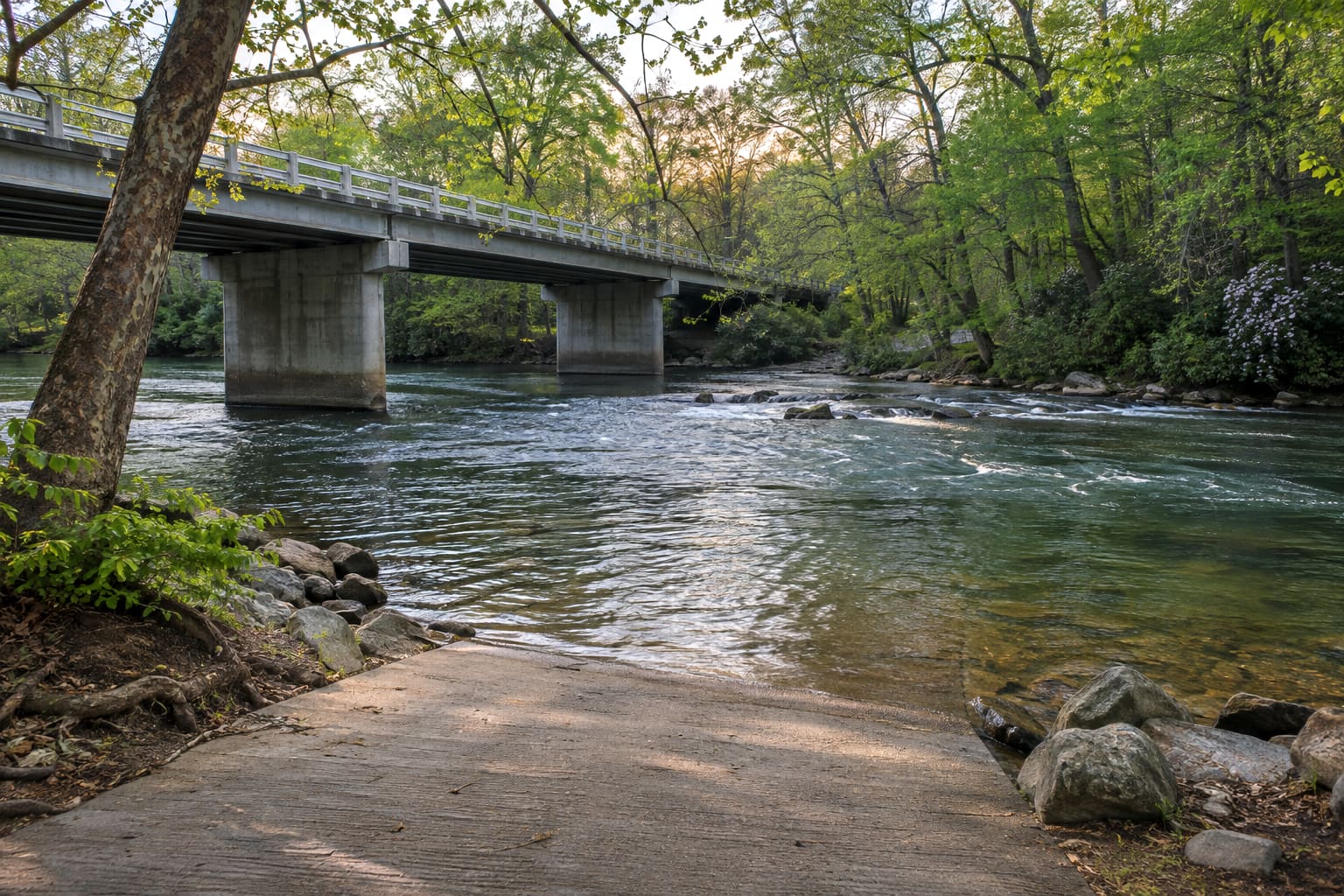
Houses sit back from the banks along here, but you would never know it from the water. Riffles spill into runs with deep slots down the middle, and the far bank is often undercut under the trees. In spring this is dry-fly water.
- The water
- Riffles and runs between suburban banks
- How it’s fished
- Wade, or float a short day
- Getting in
- Abbotts Bridge and Medlock Bridge
- What hatches
- Caddis, summer mayflies, terrestrials
Drawn, not surveyed. Parking, hours and fees are set by the park; check before you go.
Getting in
Where to get in.
Abbotts Bridge
A boat ramp, parking and restrooms at the bridge. Wade up or down from the ramp at low flows.
Medlock Bridge
A boat ramp and parking: the usual take-out for a short float from Abbotts, and the end of the artificial-lures-only water.
Wading. Mostly wadeable at low flows, with deep slots in the middle. Cross at the riffles, not the runs.
Read the water
The water to read here.
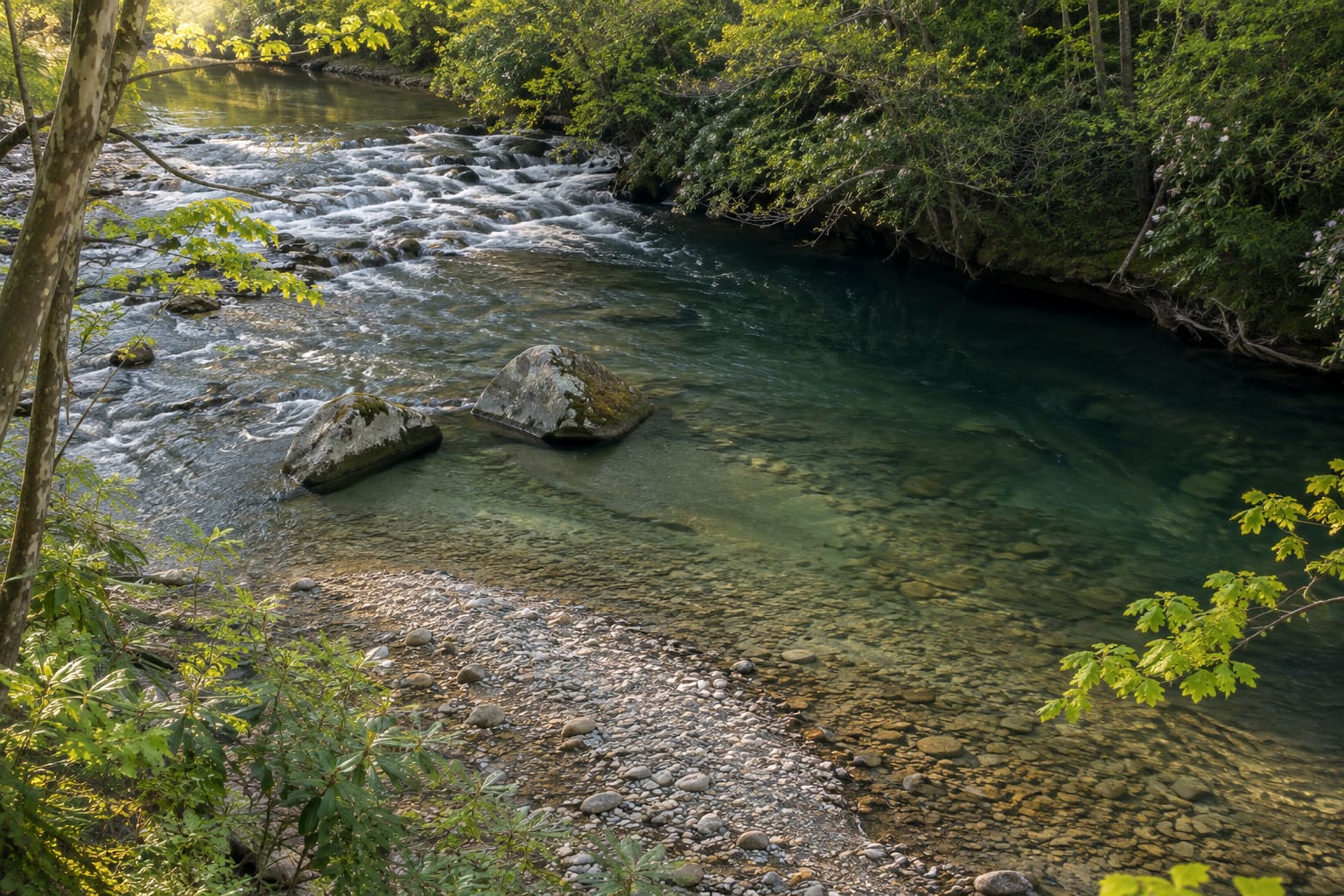
One piece of water typical of this stretch, from the bank, at low water. Put on the glasses and find the likeliest lie before you cast.
Move the lens over the water and the glare lifts. Or press a number.
Tap the water where your first cast would land, or choose a place from the list.
What would change In the spring evenings the riffle edges matter more than the pocket, when the caddis come off.
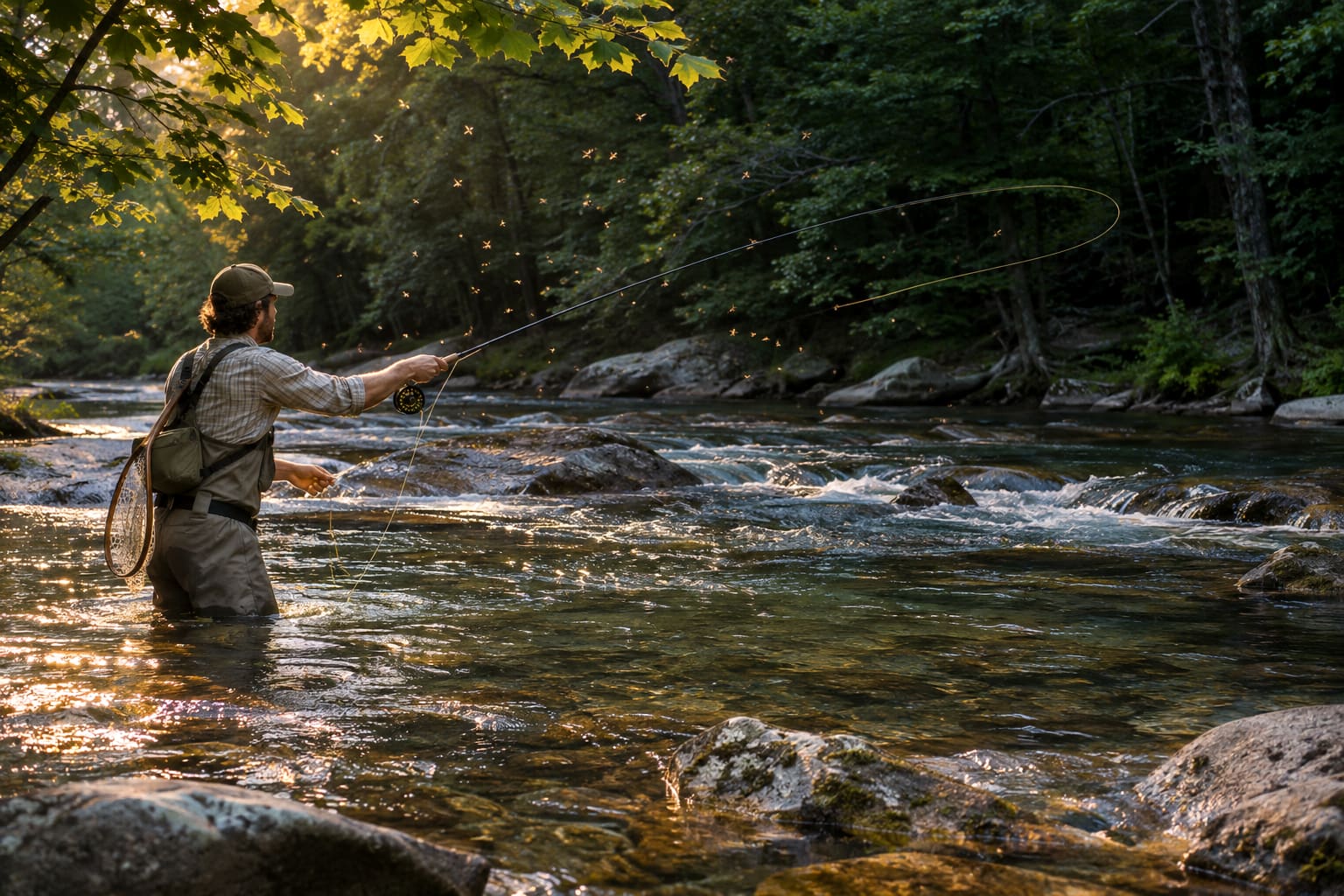
A typical piece of water for this stretch, photographed from the bank at low water; the notes are Ben’s.
The water, drawn
A dry and a dropper, down the seam.
- 1The cast. Up and across, so the flies land in the seam above you.
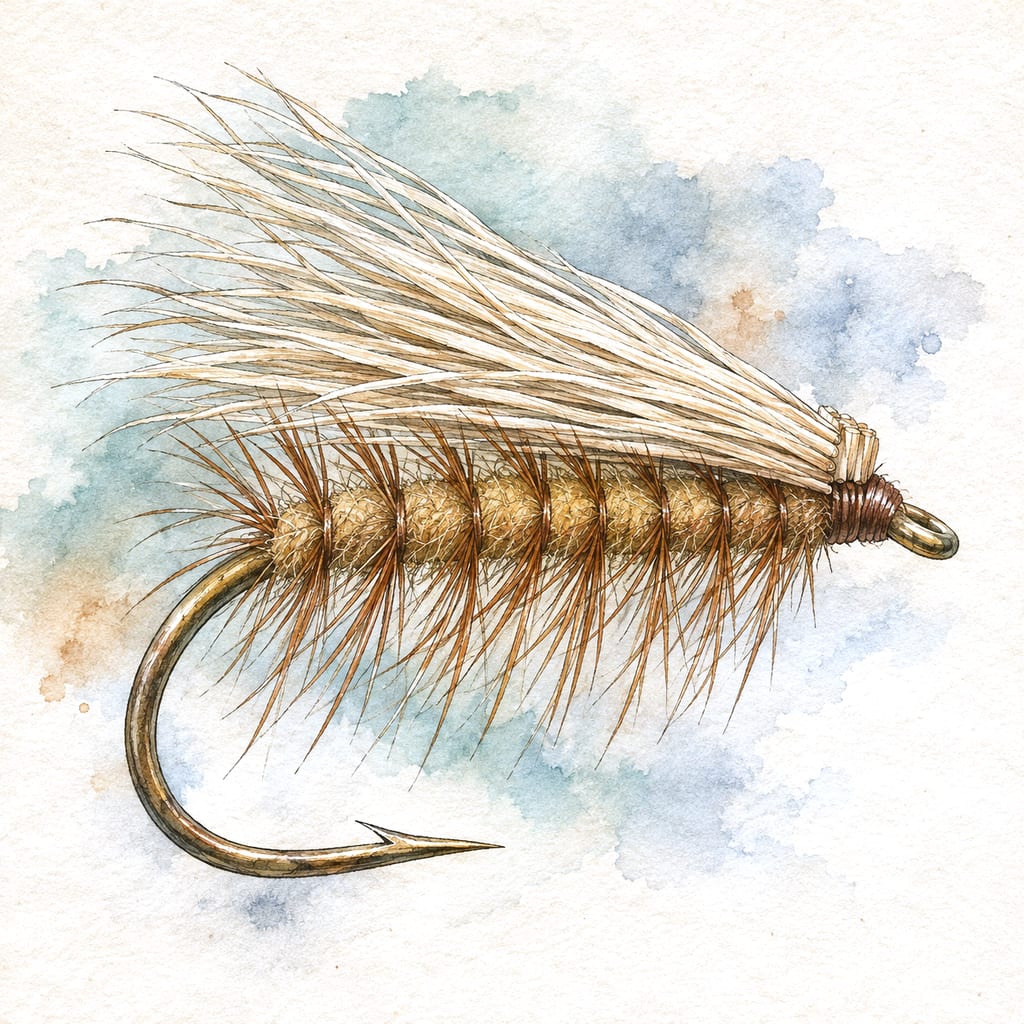
- 2The dry rides the seam. An elk-hair caddis, drifting at the speed of the bubbles. When it stops or dips, lift.
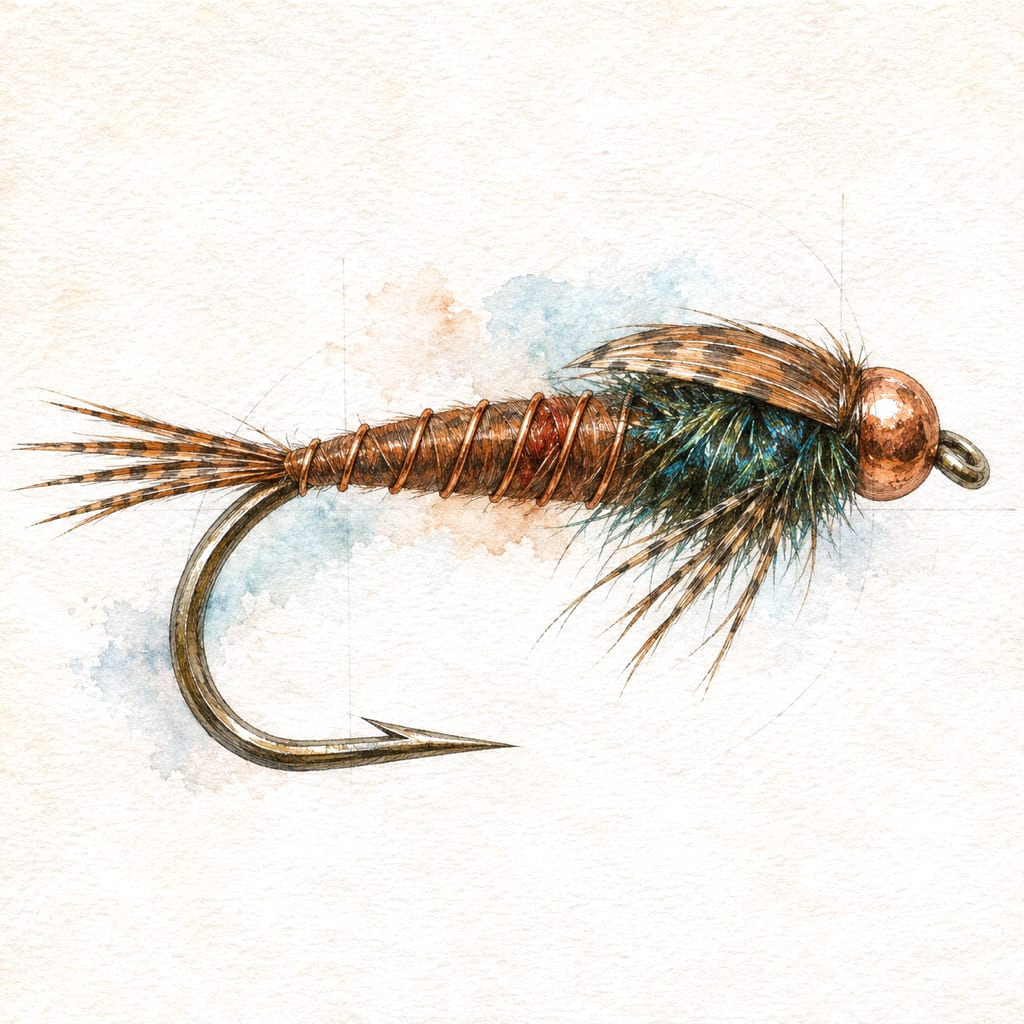
- 3The dropper. A small pheasant tail on a couple of feet of tippet below the dry: the fish takes it more often than the dry.
- 4Where to stand. On the gravel bar at the tail of the riffle, out of the push.
Drawn to explain, not surveyed.
How to fish it
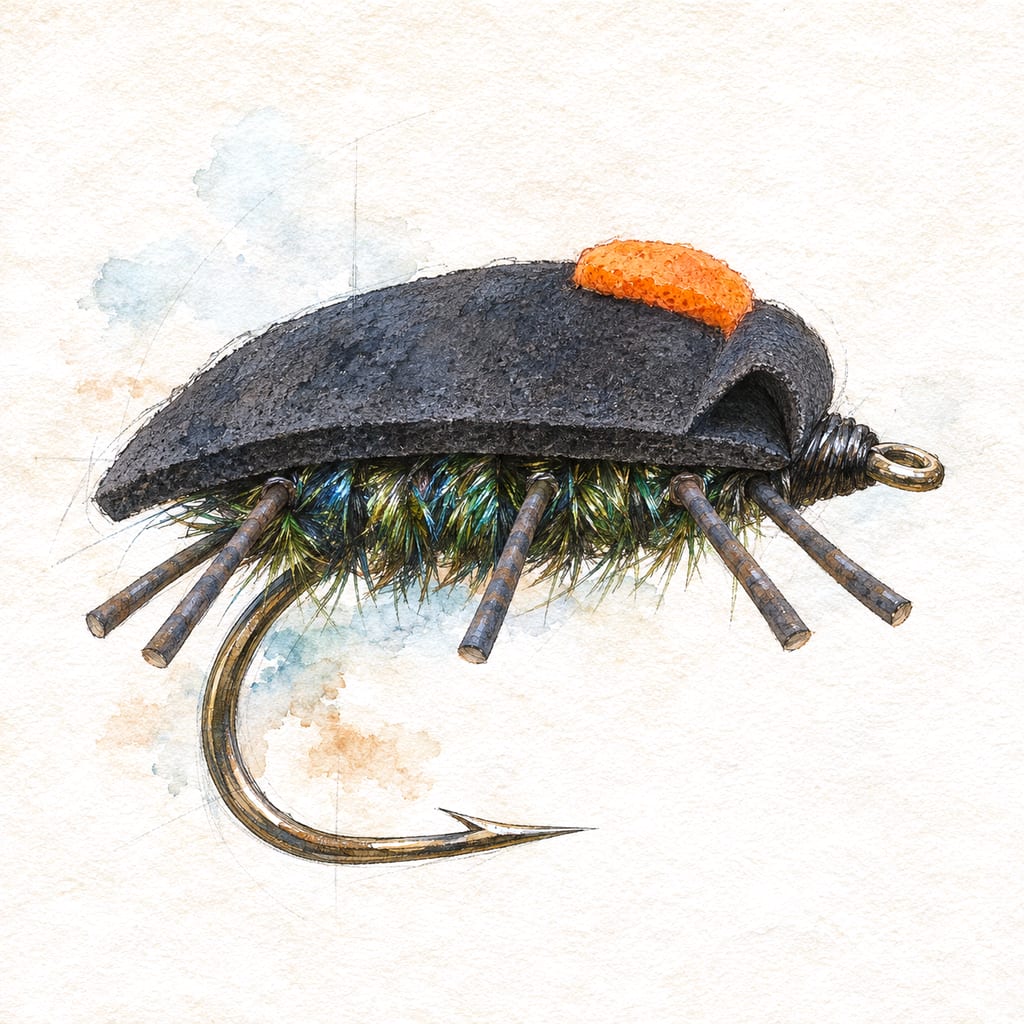
A dry and a dropper through the riffles in spring; a beetle tight to the bank on a summer afternoon.
- 1
The rig
A dry and a dropper: an elk-hair caddis with a small pheasant tail a couple of feet under it.
- 2
Where to stand
On the gravel bar at the tail of the riffle, casting up and across into the seam.
- 3
The drift
Let the dry ride the seam; when it stops or dips, lift.
The flies for it
The seasons here
The same water, four ways.
Winter
Midges in the slow water below the riffles on the warmest afternoons.
Spring
The caddis come off in the evenings and the trout rise in the seams. The best weeks of the year here.
Summer
Summer mayflies at dusk, then beetles tight to the bank in the heat of the afternoon.
Fall
Quieter water, and the leaves on it. A small nymph along the far bank.
Its insects through the year
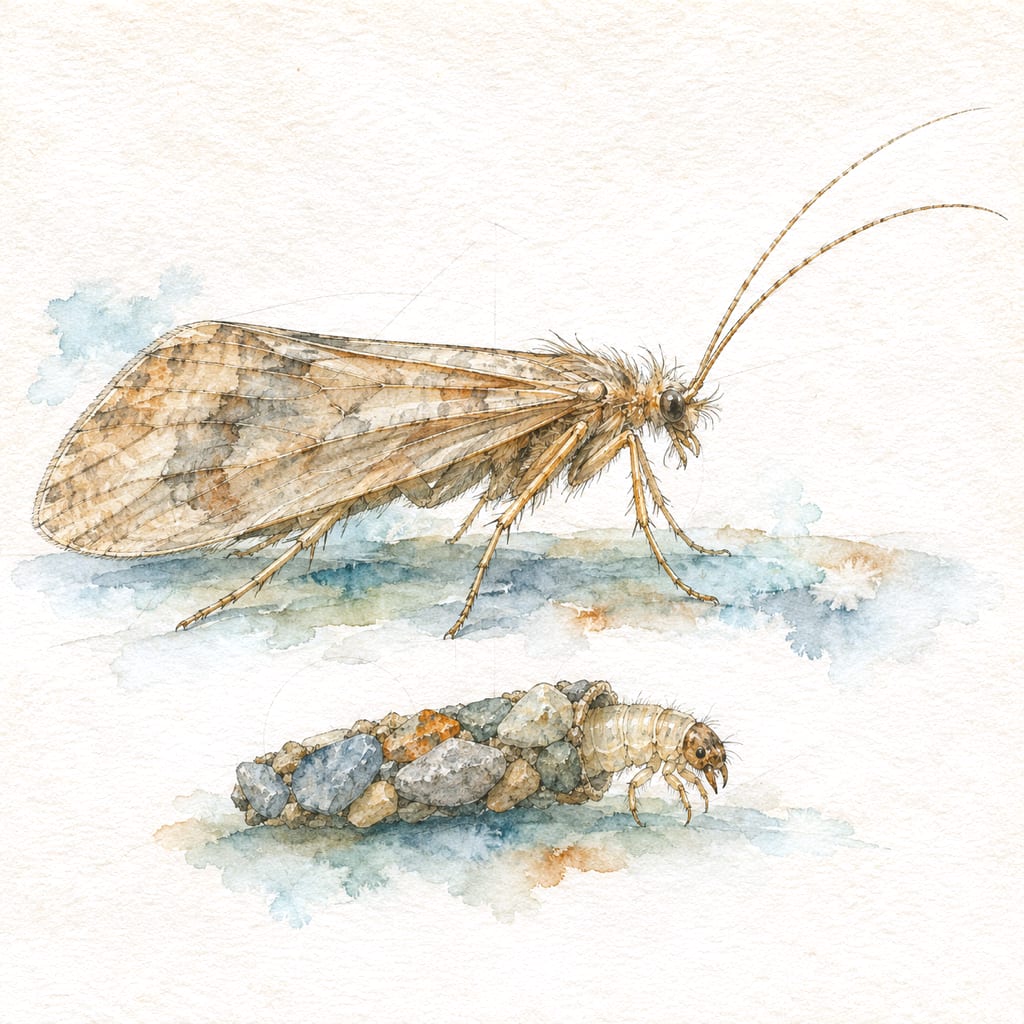
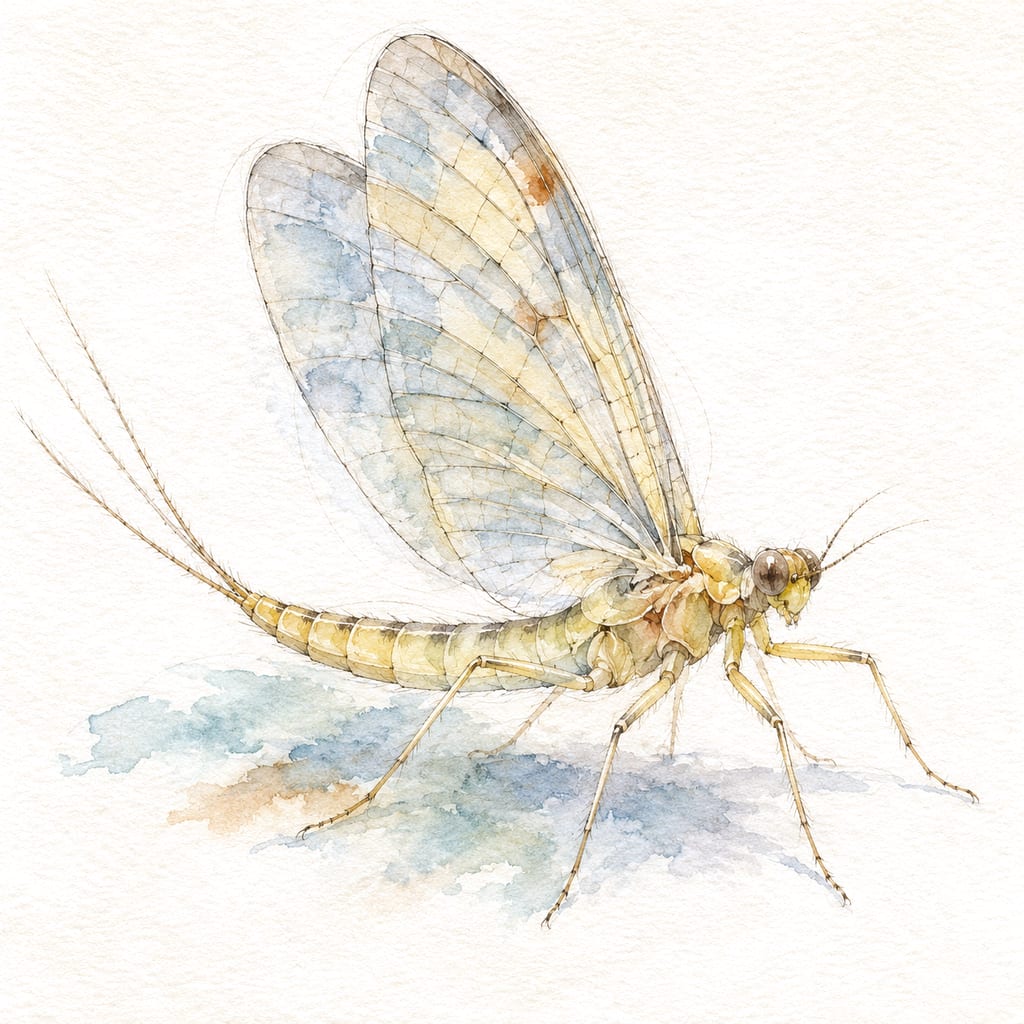
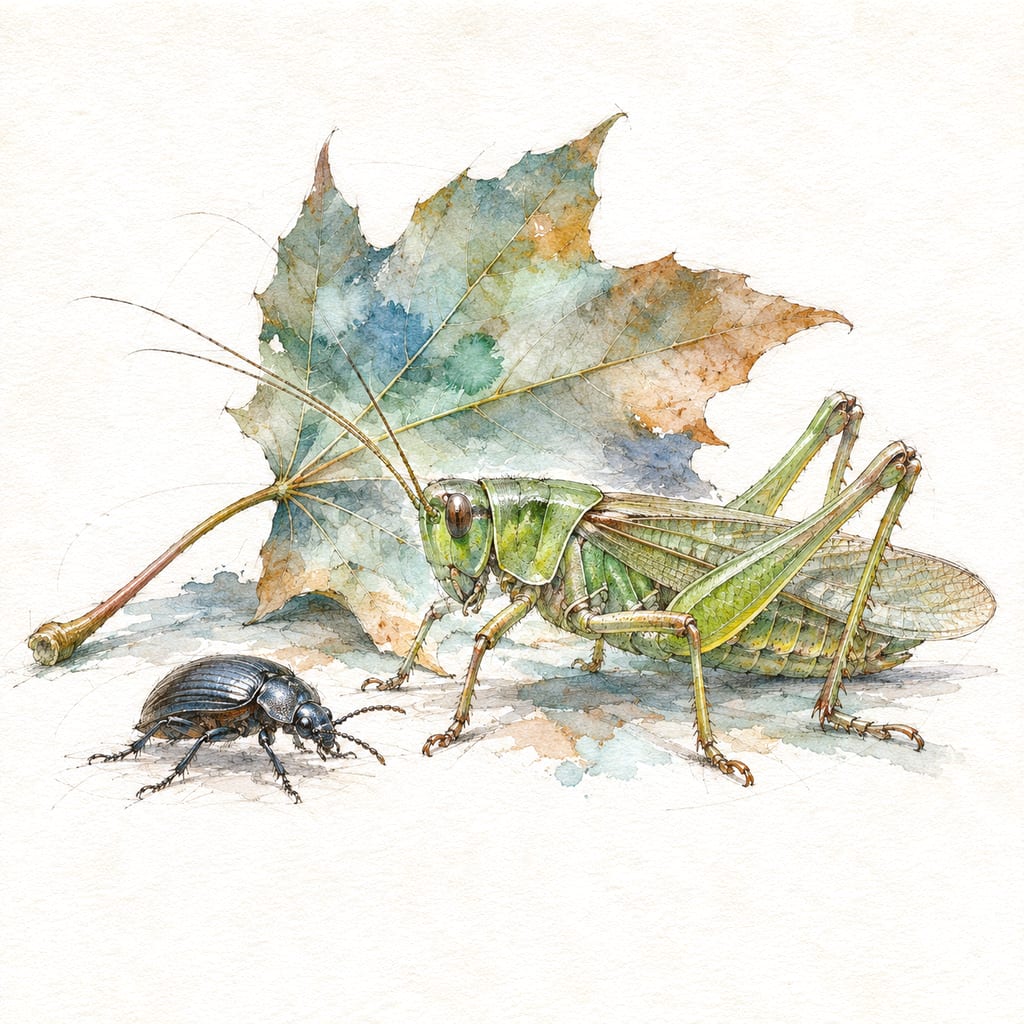
From the hatch table: a typical year. Make a field card for this stretch.
Before you go
Released water takes three hours or more to reach this stretch.
Water released from Buford Dam begins rising at Abbotts Bridge in about 3 hours 15 minutes to 4 hours 30 minutes, and at Medlock Bridge in about 3 hours 30 minutes to 4 hours 45 minutes, by the park’s estimates. Check the Corps’ Buford Dam generation schedule before you leave, and again before you step in. Mostly wadeable at low flows, with deep slots in the middle. Cross at the riffles, not the runs.
- The rule here
- Artificial lures only, down to the Medlock Bridge boat ramp just upstream of GA 141; below the ramp, the general Georgia trout regulations.
- License
- Anglers 16 and older need a Georgia fishing license and, in most cases, a trout license.
- The water
- The park posts an estimated E. coli count for Medlock Bridge; above 235 it advises against contact with the river.
Release times are the park’s estimates for each launch. Rules change: check Georgia’s current trout regulations and the park’s notices before you go.