Stretch two of five · Shoals and long glides in quiet woods
Settles Bridge to McGinnis Ferry
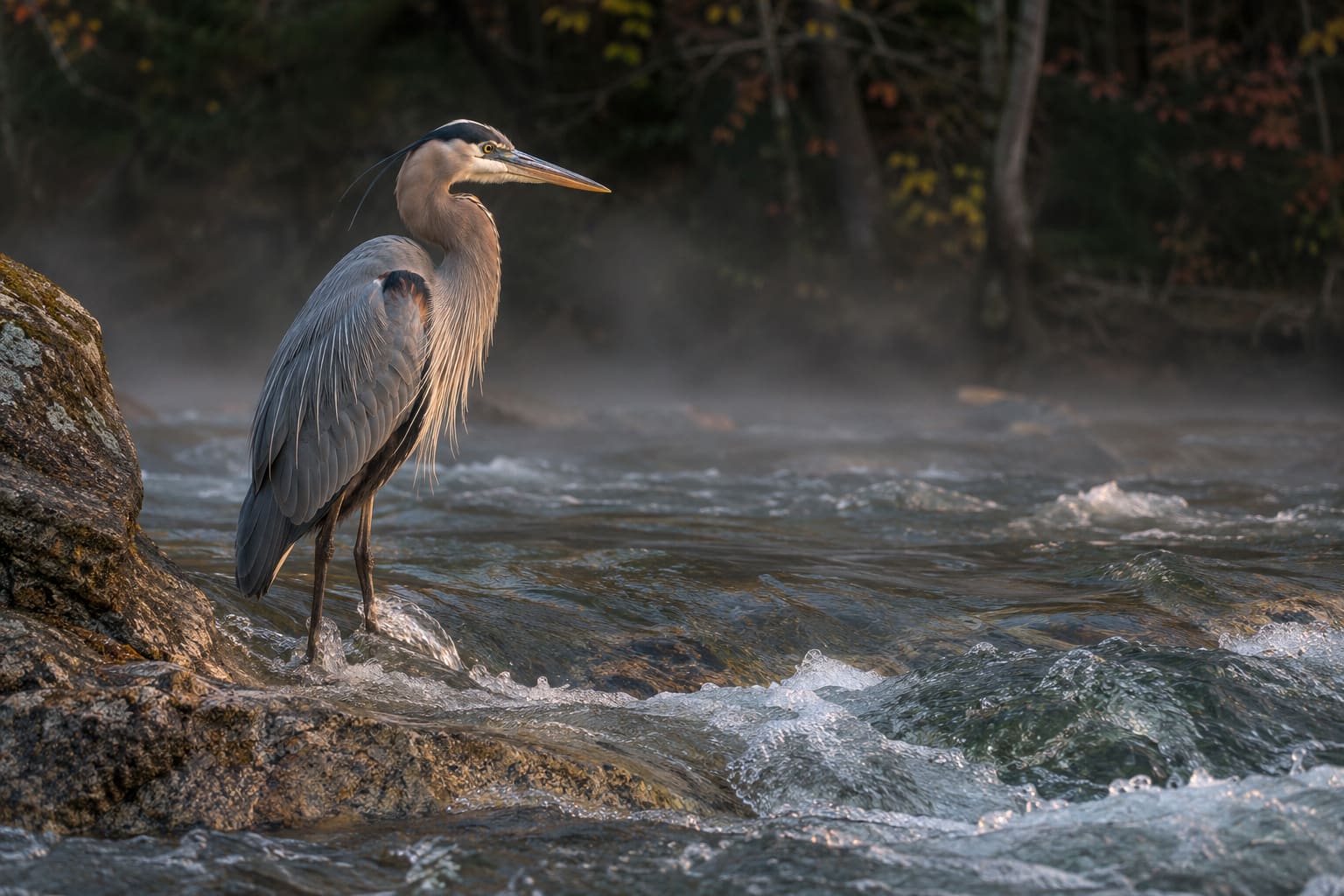
Below Bowmans Island the river widens over long granite ledges and slows into glides through woods that hide the roads. The water warms a little and the browns here are wild. It is the stretch where a heron will teach you more than any book.
- The water
- Shoals and long glides in quiet woods
- How it’s fished
- Wade the shoals
- Getting in
- Settles Bridge and McGinnis Ferry
- What hatches
- Caddis, blue-winged olives, midges
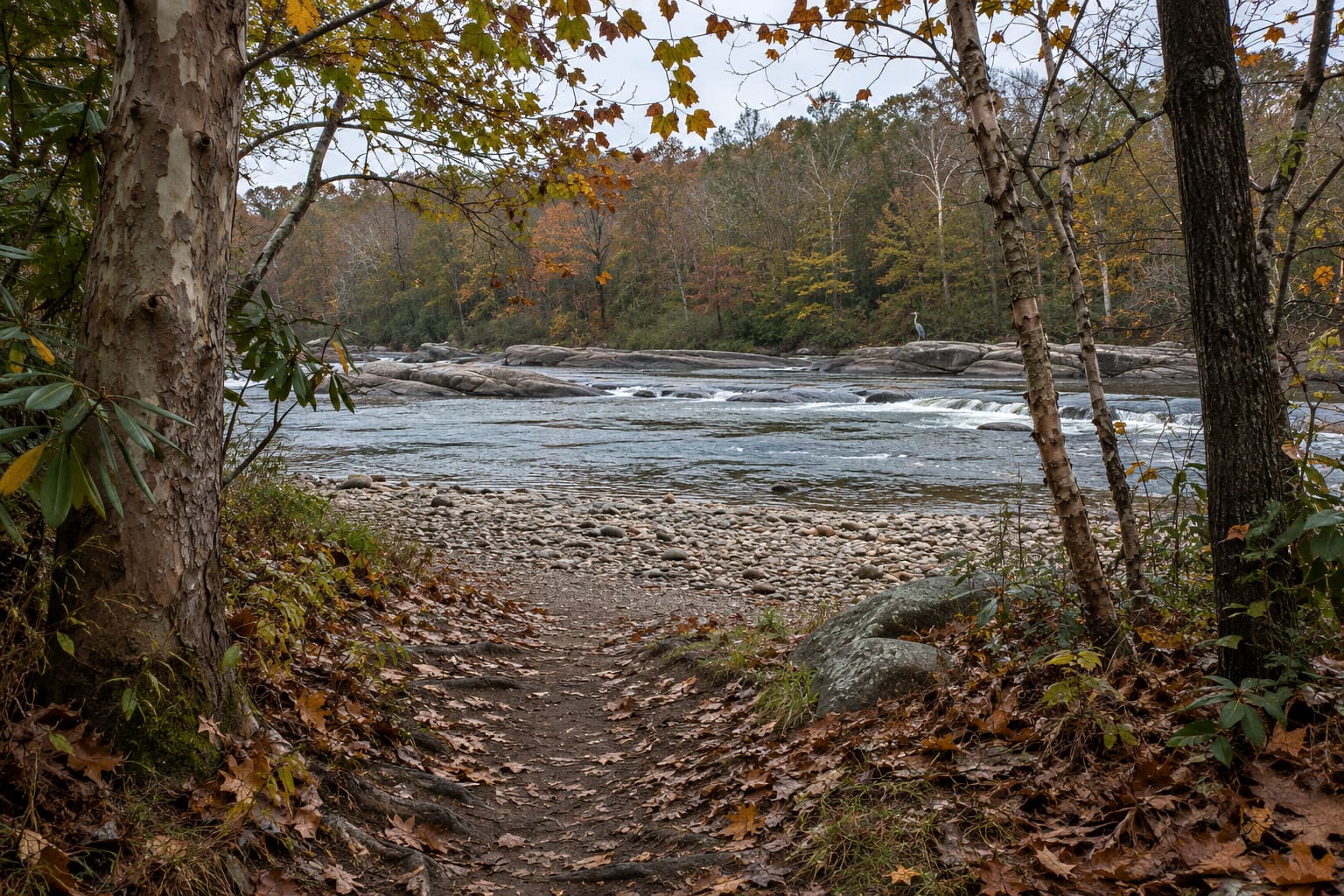
Drawn, not surveyed. Parking, hours and fees are set by the park; check before you go.
Getting in
Where to get in.
Settles Bridge
A canoe and raft launch with parking and a trailhead. The shoals and their ledges are below it.
McGinnis Ferry
A boat ramp and parking. Long glides with soft edges, good for swinging a soft hackle.
Wading. Good wading on the shoals at low water. The ledges are slick; shuffle, don’t stride.
How to fish it
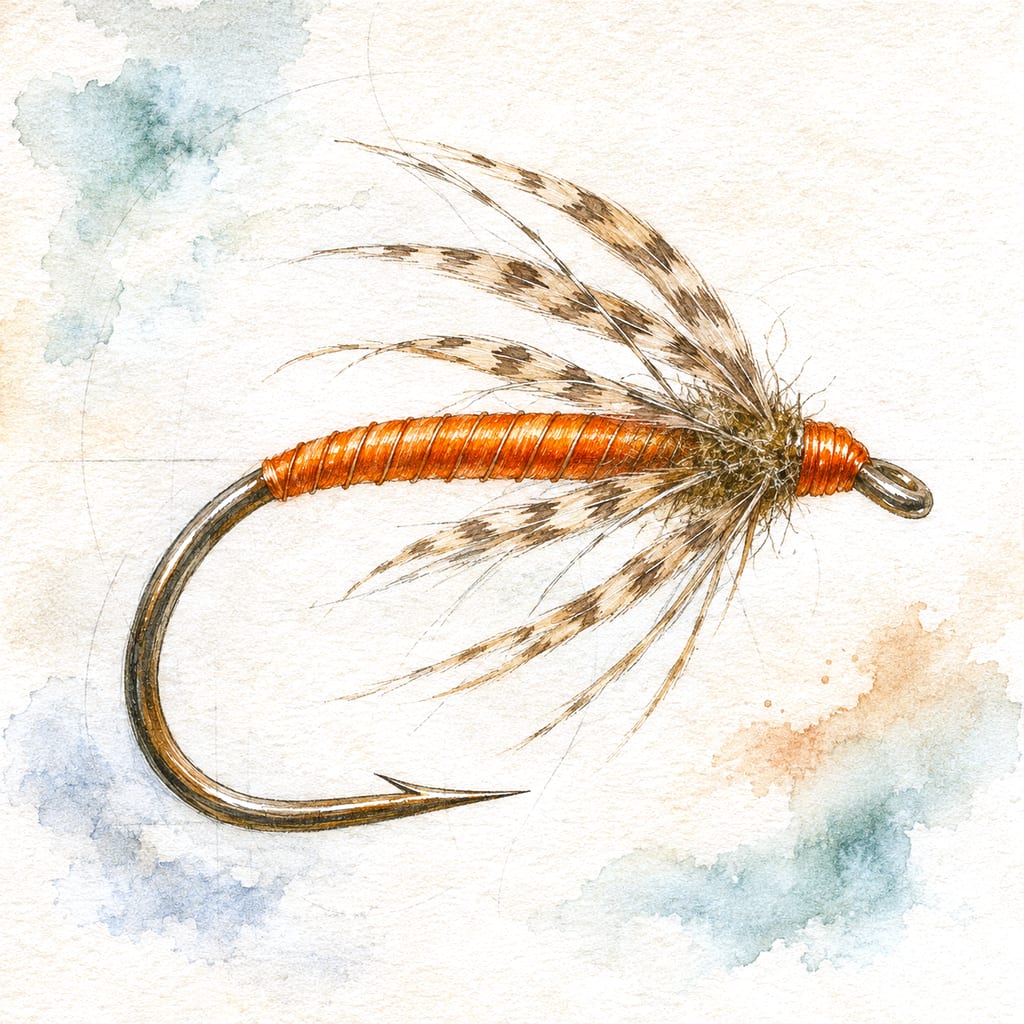
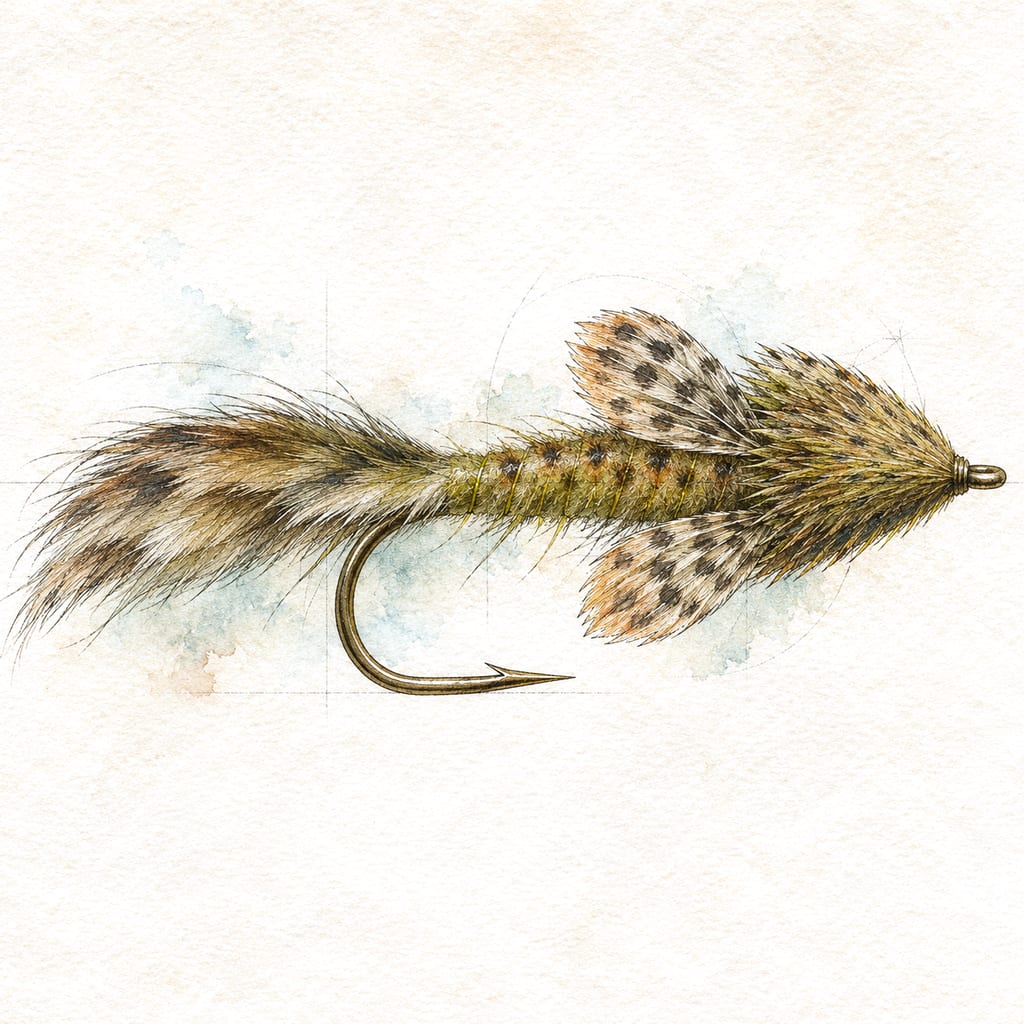
Swing a soft hackle through the tailouts, or strip a small sculpin along the ledges on a gray day.
- 1
The rig
A partridge and orange soft hackle on a floating line, or a small sculpin on a sinking tip on gray days.
- 2
Where to stand
Above a ledge, quartering down, so the fly swings across the lip and into the slot below it.
- 3
The drift
Let the swing finish. Many takes come as the fly straightens below you.
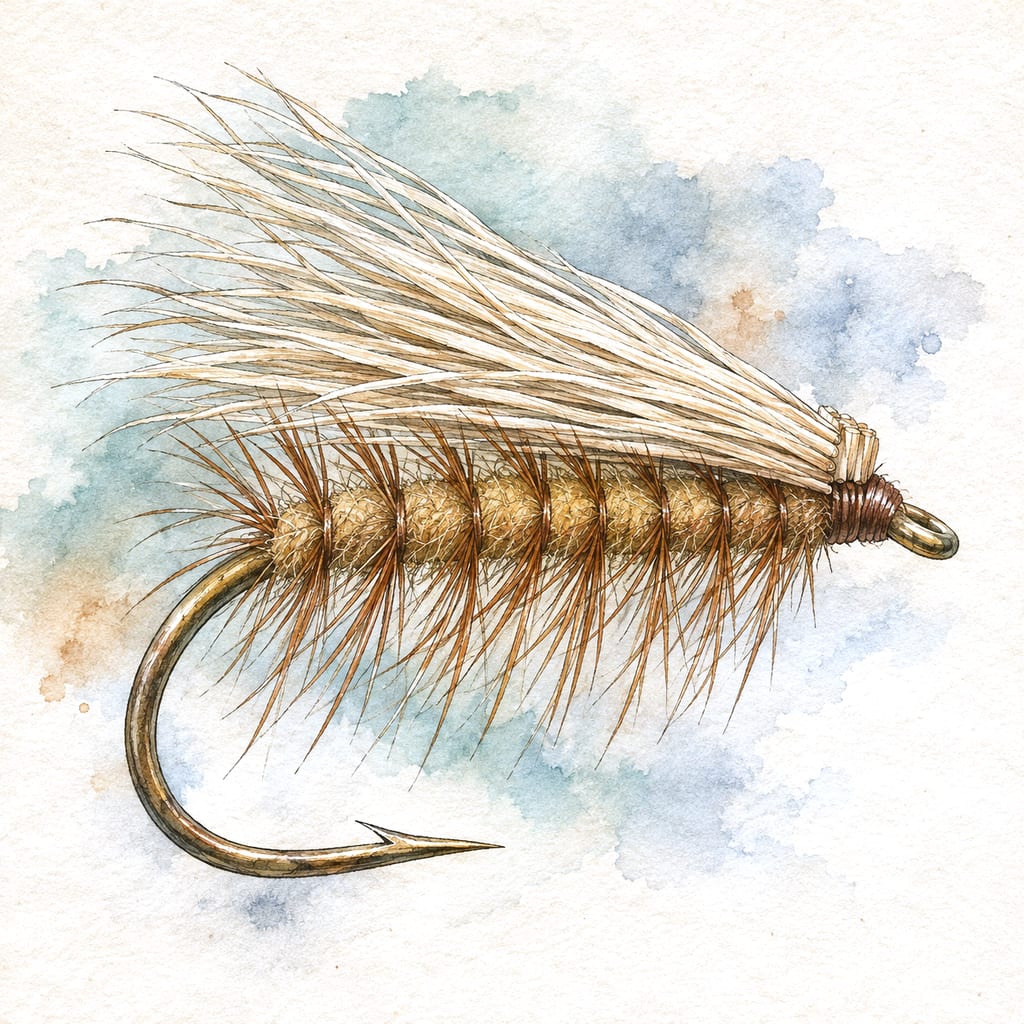
The flies for it
The water, drawn
Ledge after ledge, in profile.
- 1The lip. Water pours over each ledge in a smooth line, and food tumbles over with it.
- 2The slot below. The deepest, darkest water in each step. The likeliest lie.
- 3Where to stand. Above the ledge, quartering down, so the swung fly crosses the lip and drops into the slot.
- 4The glide. Where the shoal smooths out at its tail: rises in the evening.
Drawn to explain, not surveyed.
Read the water
The water to read here.
One piece of water typical of this stretch, from the bank, at low water. Put on the glasses and find the likeliest lie before you cast.
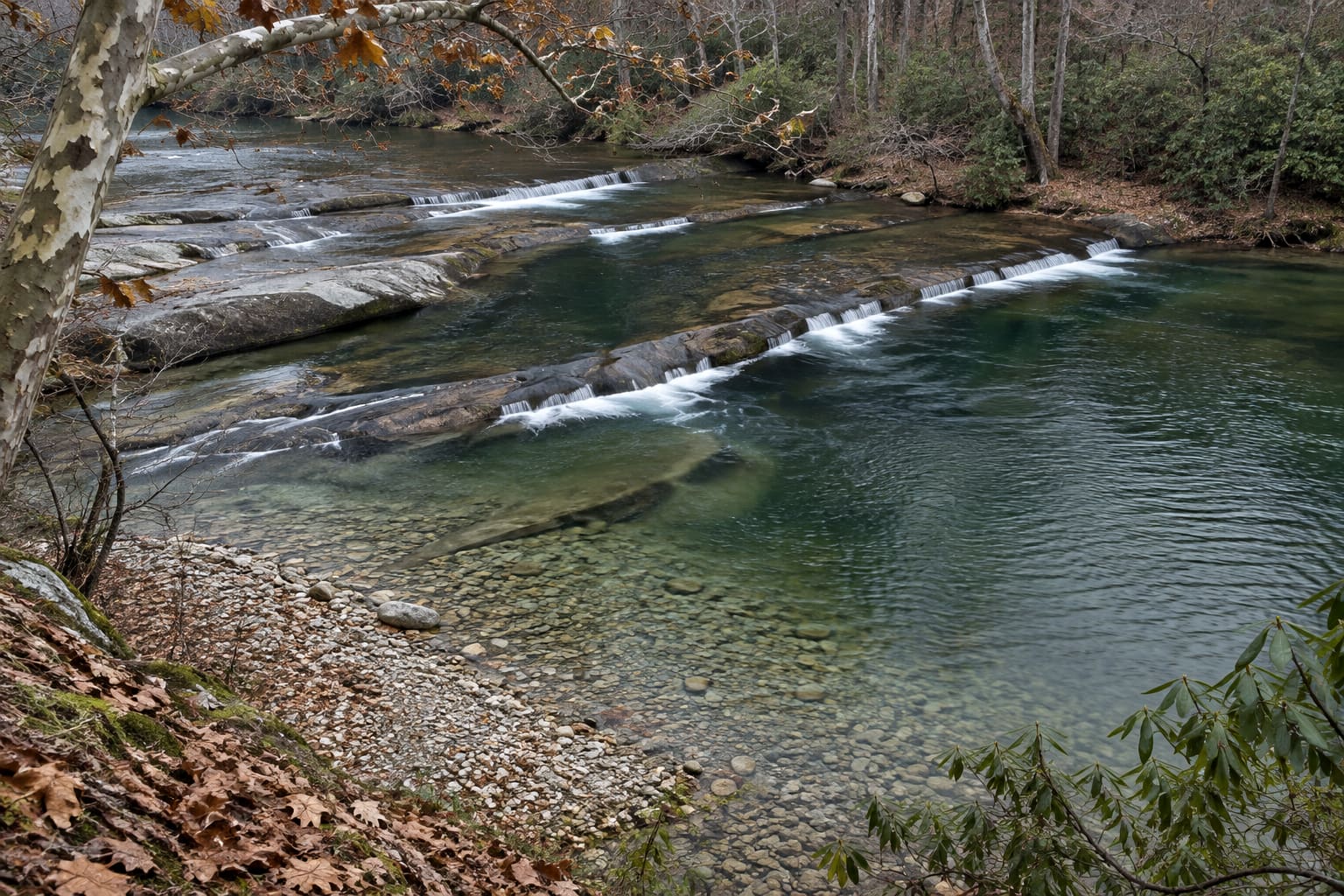
Move the lens over the water and the glare lifts. Or press a number.
Tap the water where your first cast would land, or choose a place from the list.
What would change At higher water the lips smooth over and the slots are harder to see; fish the soft edges of the tailout instead.
A typical piece of water for this stretch, photographed from the bank at low water; the notes are Ben’s.
The seasons here
The same water, four ways.
Winter
Midges and the odd olive in the glides. Fish slowly and deep below the ledges.
Spring
Caddis on the riffles in the evenings, and the best soft-hackle water on the river.
Summer
Early and late only; the shoals warm through the day. Terrestrials along the shaded banks.
Fall
Browns moving and herons on every ledge. Walk the shallows slowly and look before you cast.
Its insects through the year
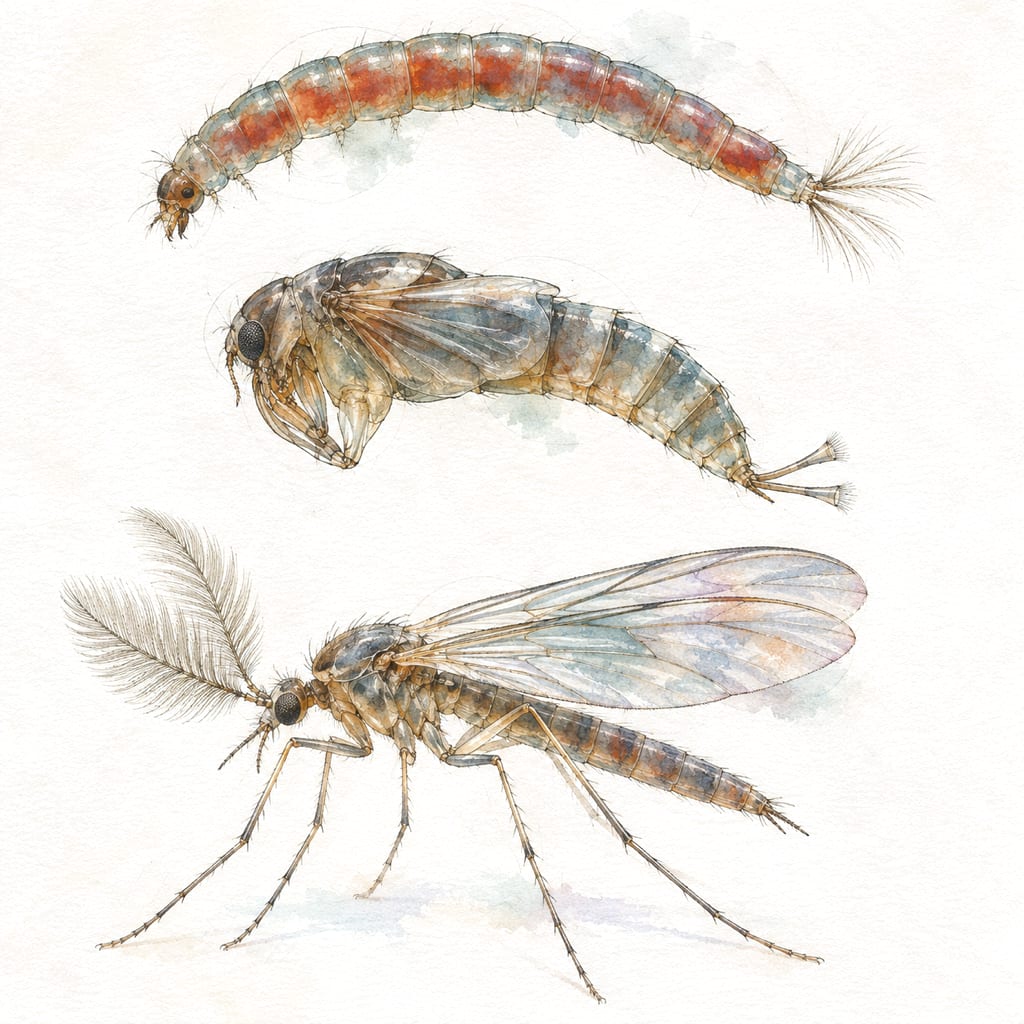
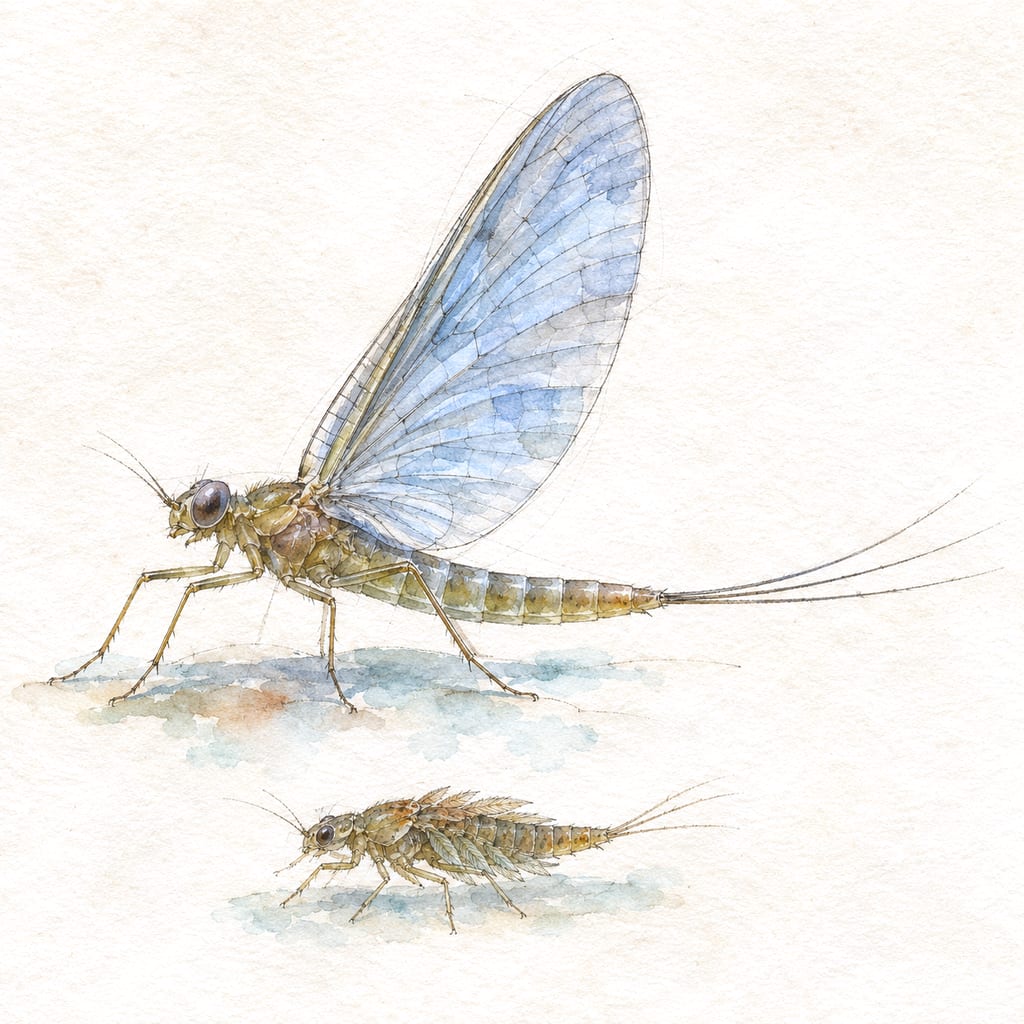
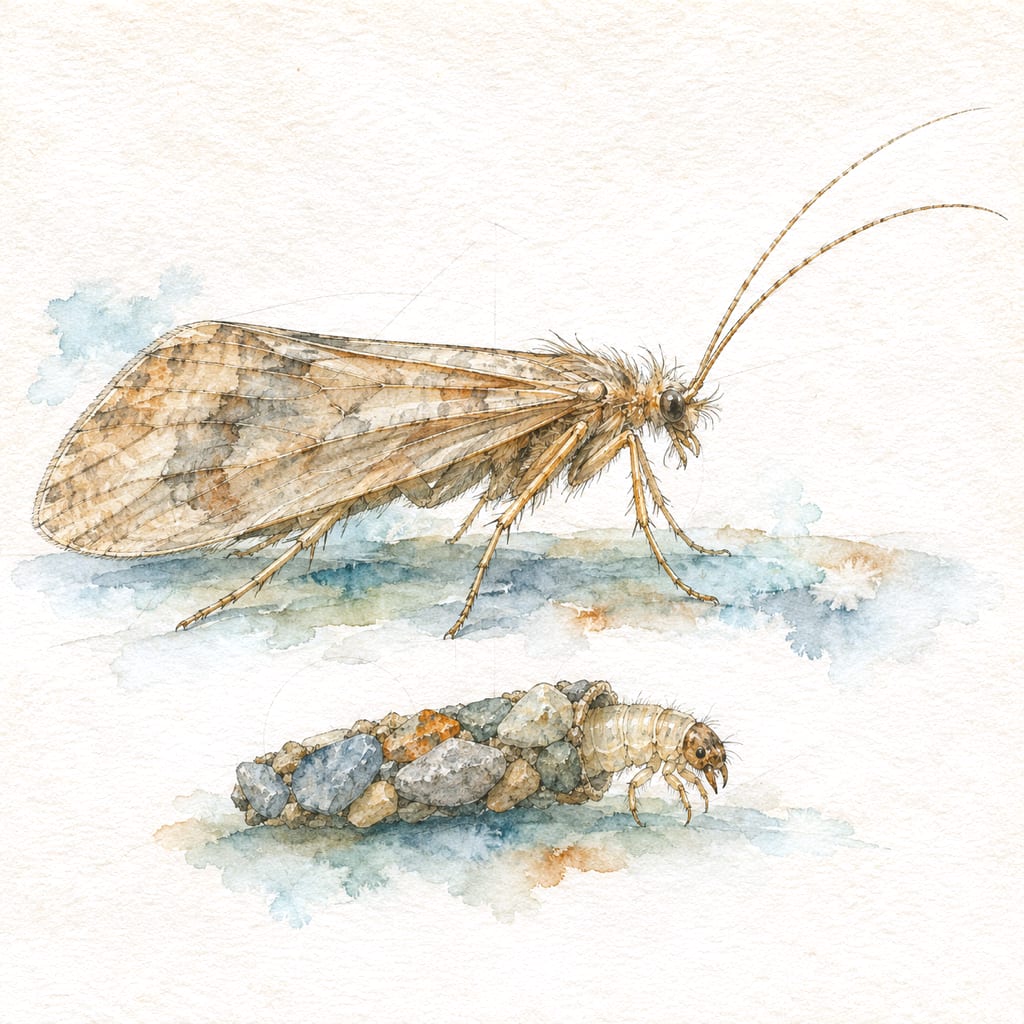
From the hatch table: a typical year. Make a field card for this stretch.
Before you go
Released water reaches Settles Bridge in about 45 minutes.
Water released from Buford Dam begins rising at Settles Bridge in about 45 minutes, and at McGinnis Ferry in about 1 hour 45 minutes to 2 hours, by the park’s estimates. Check the Corps’ Buford Dam generation schedule before you leave, and again before you step in. The ledges are slick and the slots below them are deeper than they look. Shuffle; don’t stride. Pick your way back before you wade out.
- The rule here
- Artificial lures only, from the GA 20 bridge down to the Medlock Bridge boat ramp.
- License
- Anglers 16 and older need a Georgia fishing license and, in most cases, a trout license.
- The water
- The park posts an estimated E. coli count for Medlock Bridge; above 235 it advises against contact with the river.
Release times are the park’s estimates for each launch. Rules change: check Georgia’s current trout regulations and the park’s notices before you go.